
Beach Bag: Complete Guide to Choosing the Right Size and Material
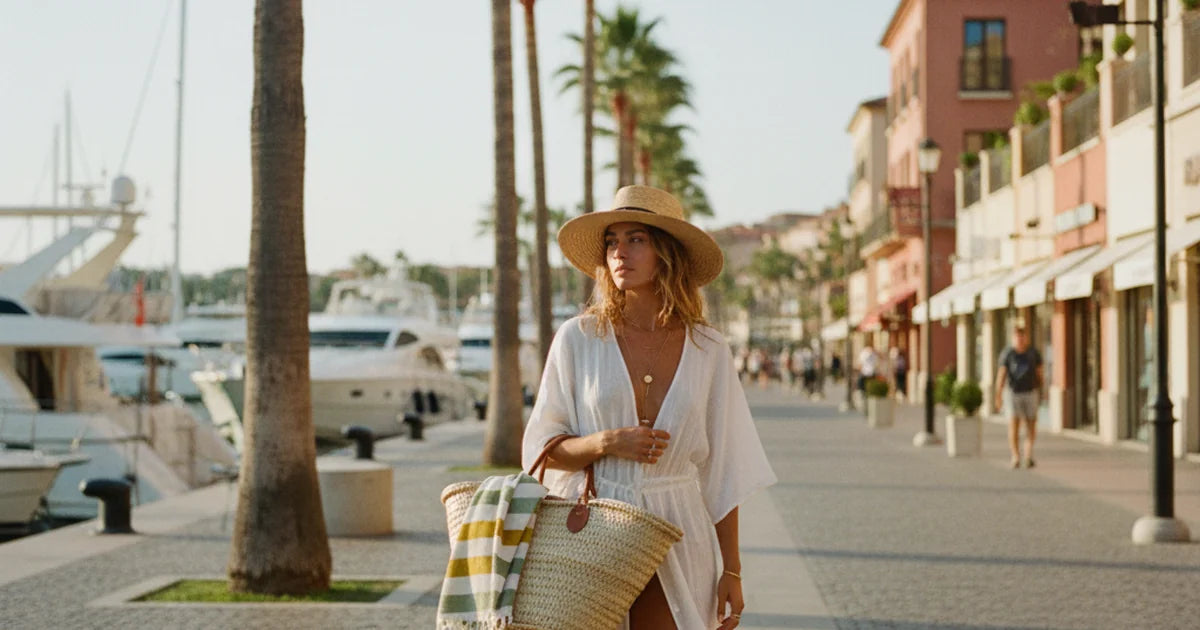
The beach bag is much more than a simple summer accessory: it's the companion that organizes your day by the sea, from leaving home until your late afternoon shower. Towels, sunscreen, water bottle, book, change of clothes—everything needs to fit, remain accessible, and withstand sand, salt water, and heat. This guide covers materials, formats, ideal dimensions, trends, and maintenance to help you choose a beach bag that is practical, durable, and stylish.
How to choose your beach bag: essential criteria
Identify your actual use
The first step is to think about what you actually carry. A full day at the beach with a towel, picnic, and sand toys is nothing like an hour-long walk by the sea. Depending on the use, you won't need the same volume, resistance, or compartments.
- Full day: a large beach bag (50-55 cm wide) that holds two towels, a water bottle, sunscreen, glasses, and a book. Rigid or reinforced bottom to place the bag on the sand without it collapsing.
- Walk or aperitif by the sea: a medium-sized flexible tote bag (38-42 cm) is sufficient. Lightweight, foldable, it can be stowed in your suitcase the rest of the time.
- Travel or weekend: a foldable and washable model that serves as a beach bag by day and a shopping bag by night.
Handles: comfort and strength
The handles determine carrying comfort over time. Handles that are too short force you to carry the bag by hand; too long, they slip off your shoulder. The ideal for a beach bag is handles of 55-65 cm that fit well on the shoulder, even over a sarong or light jacket.
Opt for handles reinforced at the attachment points—this is the area of maximum tension, the one that breaks first on cheap bags. Braided cotton or thick webbing handles offer the best compromise between strength and flexibility.
Pockets and compartments
A good beach bag is not a gaping hole. The details that make all the difference:
- Interior zippered pocket: essential for your phone, keys, and money—items you don't want to search for at the bottom of the bag.
- Exterior pocket: quick access to sunscreen, glasses, or face mist.
- Separate compartment (or removable internal bag): isolates wet swimwear from the rest. This prevents everything from getting wet on the way back.
Rigid, flexible, or foldable bag: advantages and limitations
| Type | Advantages | Limitations | Ideal for |
|---|---|---|---|
| Rigid bag | Keeps its shape, protects contents, stable bottom on sand | More bulky, not foldable | Long days, families |
| Flexible bag | Lightweight, comfortable, adapts to volume | Collapses when not full | Walks, daily use |
| Foldable bag | Stores in suitcase, ultra-light | Less structured, few compartments | Travel, weekends |
Beach bag materials: a complete comparison

Cotton: the most versatile
Cotton remains the most versatile material for a beach bag. It is lightweight, breathable, machine washable at 30°C, and withstands wear well. Thick cotton bags (280-350 g/m²) retain their shape even after several seasons. It is also the material that best accepts printed patterns: floral, geometric, stripes—cotton lends itself to all styles.
Quilted cotton offers an additional advantage: the double padded layer better protects the contents and gives the bag superior structure. If you are looking for a cotton beach bag with volume and structure, this is the right choice.
Canvas: maximum strength
Canvas (thick, tightly woven cotton) is the most resistant material. It can withstand heavy loads without deforming and resists sand abrasion. A 16 oz canvas bag will last for years. The look is a little sportier than classic cotton, but some waxed or coated canvas models add a chic touch and protection against moisture.
Straw and raffia: the summer spirit
The straw bag is the icon of summer. Its natural look, airy weave, and bohemian charm make it a very photogenic accessory. However, straw does not withstand water well, fine sand gets embedded in the weave, and it deforms over time. It's an excellent choice for walks and aperitifs by the sea, less so for intense days at the beach.
Linen: sober and refined
Linen is lightweight, thermoregulating, and naturally antibacterial. It dries quickly and doesn't retain odors—a real asset after a hot day. Its appearance is more chic than cotton, with a slightly crinkled drape that gives it character. Washed linen (stone-washed) is softer and smoother from the first use.
Polyester and nylon: the technical option
For those looking for a 100% waterproof bag, coated polyester or ripstop nylon are the technical materials par excellence. Ultra-light, they dry in minutes, and resist water and salt. The look is sportier, less bohemian—but it's unbeatable for water activities (kayaking, paddleboarding, boating).
Material comparison
| Material | Resistance | Weight | Washing | Style |
|---|---|---|---|---|
| Cotton | ★★★★ | Light | Machine 30 °C | Bohemian, colorful |
| Quilted cotton | ★★★★★ | Medium | Machine 30 °C | Structured, soft |
| Canvas | ★★★★★ | Medium-heavy | Sponge / machine | Sporty, durable |
| Straw / raffia | ★★ | Light | Dry brush | Summer, bohemian |
| Linen | ★★★ | Light | Hand / delicate | Chic, minimalist |
| Polyester / nylon | ★★★★ | Ultra-light | Machine | Sporty, technical |
Size and dimensions: what beach bag format to choose
Ideal dimensions according to use
The question "what beach bag dimensions" often comes up. Here's a simple guide based on use:
| Usage | Width | Height | Depth | Estimated Volume |
|---|---|---|---|---|
| Walk / aperitif | 35-40 cm | 28-32 cm | 10-14 cm | 10-15 L |
| Half-day | 42-48 cm | 32-36 cm | 14-18 cm | 20-30 L |
| Full day | 50-55 cm | 35-40 cm | 18-22 cm | 35-45 L |
| Family (2+ people) | 55-60 cm | 38-42 cm | 20-25 cm | 45-60 L |
Tote bag, shopper bag or bucket bag: which format
The tote bag (trapezoidal shape, wide bottom) is the king of beach bag formats. It offers the best volume/stability ratio. The shopper bag is flatter and lighter—perfect for short outings, but it lacks structure for big days. Discover our complete comparison in the article tote bag vs. shopper bag vs. carry-all.
The bucket bag (round or oval, with a drawstring) is more compact and original. It protects the contents well from dust and sand, but its reduced opening makes access less practical when the bag is full.
Beach bag styles and trends
The large printed fabric tote bag
The large fabric tote bag has been a strong trend for several seasons. Printed patterns—floral, geometric, tropical—bring color and personality. Printing techniques like block print create unique patterns with natural variations that give character to each piece.
The advantage of the fabric tote bag: it's washable, foldable, and comes in dozens of patterns. You can have several—a colorful one for the beach, a neutral one for the city—without cluttering your closet.
Minimalism: neutral tones and raw materials
Minimalist style focuses on sand, ecru, natural linen, and off-white tones. No patterns, or a discreet tone-on-tone pattern. Raw finishes (unhemmed edges, exposed seams, crumpled linen) reinforce the natural character. This style goes with all summer outfits and ages very well.
The chic beach bag: moving beyond the seaside cliché
A beach bag is not condemned to stay on the sand. Structured cotton, coated canvas, or washed linen models easily transition from the seaside to a restaurant, from the market to a terrace. Opt for leather or braided cotton handles, sober colors (navy, khaki, burgundy), and a neat finish. For more inspiration, check out our guide on the chic beach bag.
The colors that work best
- Navy / indigo: versatile, doesn't show stains, elegant in the city as well as on the beach.
- Ecru / sand: natural spirit, goes with everything. Watch out for stains—opt for washable cotton.
- Terracotta / rust: warm, trendy, perfect with linen or white.
- Sage green / khaki: sober, natural, goes unnoticed in all contexts.
- Navy/white stripes: the classic seaside look that never goes out of style.
Discover the collection
Free delivery from €60 · Soft and washable cotton
Maintenance and durability of a beach bag
Washing according to material
Sand, salt, and sunscreen are the three enemies of the beach bag. Here's how to care for each material:
- Cotton and quilted cotton: machine wash at 30°C, delicate cycle, mild detergent. Air dry, flat or on a hanger. Avoid the dryer, which can shrink the fabric and alter patterns.
- Canvas: damp sponge with mild soap for localized stains. Machine wash at 30°C for a complete wash, but less frequently—canvas stays clean well.
- Straw and raffia: soft, dry brush only. Never use water—it deforms natural fibers. If the bag smells musty, air it out in the sun for a few hours.
- Linen: hand wash in lukewarm water with neutral soap. Dry flat. Linen does not tolerate wringing well—gently squeeze by hand.
- Polyester / nylon: rinse with clean water after each use in the sea, machine wash at 30°C occasionally.
After each beach outing
The habit to adopt after every beach day:
- Shake out the sand outdoors—turn the bag inside out if possible.
- Rinse off salt marks with a damp cloth (fresh water).
- Allow to dry open in the open air—never closed and damp, or mold is guaranteed.
- Check seams and handles—a pulled thread can be repaired quickly, an ignored hole will grow.
Extend the life of your bag
A good beach bag can last 5 to 10 years with minimal care. The actions that make a difference:
- Store it flat or hung, never crushed under a pile of clothes.
- Protect it from prolonged direct light—UV rays will fade patterns over time.
- Treat sunscreen stains immediately—they are greasy and will set if they dry.
- If the handles show signs of weakness, have them reinforced by a seamstress instead of throwing away the bag.
Beach bag and travel: good practices
The beach bag on a plane
A foldable beach bag serves as a smart additional luggage for travel. Tucked into your suitcase, it takes up almost no space. Once there, it becomes your beach bag, shopping bag, or walking bag. Cotton or lightweight nylon models fold down to the size of a pouch.
For your cabin toiletries, remember to check out our guide on the airplane toiletry bag.
The beach bag as a city bag
The best beach bags are those you also carry in the city. A printed cotton or washed linen tote bag effortlessly transitions from the market to a restaurant, from a terrace to a museum. Choose a model with a closure (zip or magnetic button) if you want to use it in the city—an open bag is practical at the beach, less so in an urban environment.
If you're looking for a bag with more structure for everyday use, also discover our selection of trendy quilted bags.
FAQ — Beach bag
What size should I choose for a beach bag?
What is the best material for a beach bag?
Hard or soft beach bag, which one to choose?
How to wash a cotton beach bag?
Can a beach bag be used in the city?
How to prevent sand from staying in the bag?
Which beach bag for air travel?
What colors to choose for a beach bag?
Explore Bokabas bags
Free delivery from €60 · Quilted cotton · Exclusive designs
🛍️ Bag Collection
Totes, tote bags, and cotton beach bags — colorful, washable, and designed to last.
View the collection


Leave a comment
This site is protected by hCaptcha and the hCaptcha Privacy Policy and Terms of Service apply.