
Which yoga mat bag should you choose? The most practical models
Do you want to transport your mat without damaging it, without being weighed down, and without wasting time at the studio entrance? The yoga mat bag solves the comfort + protection + simplicity equation. The idea is to adapt it to your mat (length, thickness, rolled diameter) and your journeys (subway, bike, walking), while prioritizing breathable materials—cotton or linen—to wick away moisture after your session. In this comprehensive guide, we'll look at the most common formats, the drawstring vs. zipper debate, the benefits of natural fibers, and purchase checklists based on your use. By the end, you'll know exactly what to choose—and why.
- Measure your rolled mat: length (cm), diameter (cm), thickness (mm).
- Format: fitted sleeve (space-saving) or wider tube bag (easy insertion, space for towel).
- Opening: drawstring = ultra light and quick; zip = full access, ideal for thick mats (6–8 mm).
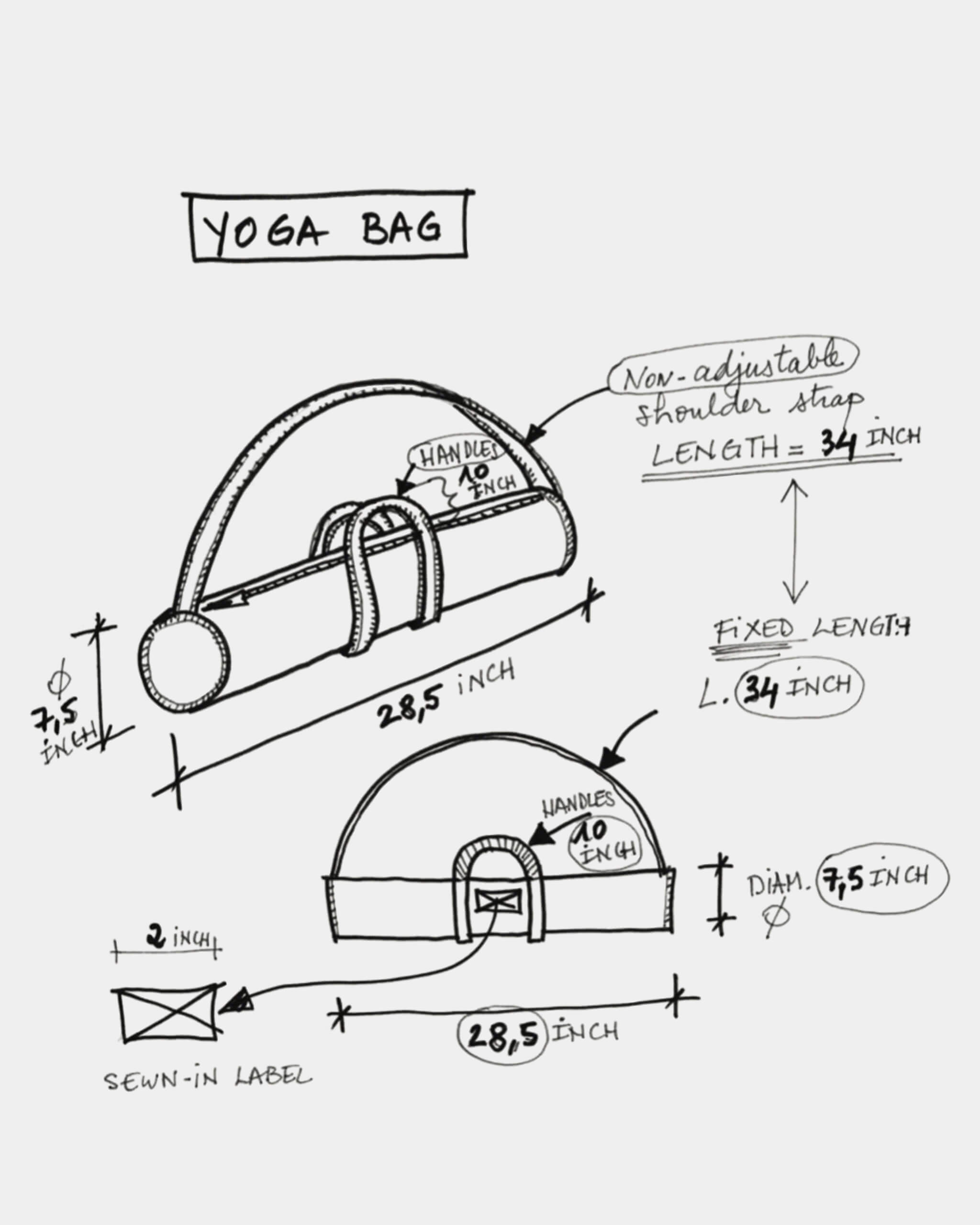
- Carrying: adjustable shoulder strap + shoulder pad; side handle for maneuvering in transit.
- Material: breathable cotton/linen, light lining, ventilation eyelets.
- Details: phone/key pocket, bottle compartment, bound seams, reinforced bottom.
Yoga Mat Bag: How to Choose Without Making a Mistake?
It all starts with your mat's dimensions. Most measure 61x173 cm or 61x183 cm, with a thickness of 3 to 6 mm (up to 8 mm for very comfortable mats). Rolled up, this gives an average diameter of 12 to 16 cm, sometimes 18–20 cm for thick or very dense models. These numbers dictate the size of the bag.
Taking the Right Measurements
- Length: check the usable length of the bag (zip or seam to seam). Leave a 2–4 cm margin so as not to force the opening.
- Rolled Diameter: actually measure your mat rolled without squeezing it. A bag advertised as "universal" might be too tight if your mat is 18–20 cm in diameter.
- Thickness: 3–5 mm = all systems are suitable; 6–8 mm = prefer full zip or wide tube.
Adapting the Bag's Size
- Fitted Sleeve (slim profile): hugs the mat; perfect if you walk or if the changing room is small. Zero space for a towel/outfit — that's the point.
- Versatile Tube Bag: more generous diameter; you can slip in a microfibre towel, a tee, and a small water bottle.
- Expandable Sheath: stretchy material (jersey/blended canvas) — accommodates variations in diameter.
- "Mat + Gear" Bag: central compartment for clothes + rail or holster for the mat — weekend/retreat option.
Carrying Comfort
- Adjustable Shoulder Strap: adjust to prevent the bag from hitting your hip. A shoulder pad (cushioning piece) provides real comfort for long walks/bike rides.
- Side Handle: useful on stairs/subway, for hoisting the bag without swinging it.
- Attachment Points: X-stitching, bartacks, metal D-rings (durability).
Structural Details
- Pockets: a zippered pocket (phone/cards/key), an elasticated pocket (bottle) is the balance. Too many pockets = more weight and bulk.
- Ventilation: ventilation eyelets or mesh strip to wick away moisture after your session.
- Reinforced Bottom: a discreet reinforcement prevents wear from contact with the ground.
The Most Common Formats
Each format has its logic. Choose it based on your journeys, your mat's density, and what else you want to carry.
Minimalist Fitted Sleeve
The purists' choice. It takes the shape of the mat, stays close to the body, and doesn't stick out. Ideal if you walk from home to the studio, and you already have a thin towel provided at the studio. Advantages: lightweight, often affordable, streamlined silhouette. Limitations: sometimes trickier to insert (especially thick mats), little space for accessories.
Versatile Tube Bag
The most common compromise. More generous diameter, wide opening (drawstring or zip), one external zippered pocket for your phone, a small mesh pocket for a water bottle. If you take the subway, bike, and want to leave your city bag in the changing room, this is a real plus. You store everything in one place without it becoming excessively bulky.
Expandable Sheath
"Conforming" material (a bit of elastane): perfect if you alternate between various mats (personal + studio) or if you share the bag. It's more forgiving to slip on, especially with textured mats (pronounced grips) that snag when dry.
Weekend / Retreat Bag
Large bag with integrated mat storage (rail, external straps, or zippered side tunnel). The idea: carry everything for a class + sauna + brunch or a mini-retreat. More voluminous, heavier when empty, but extremely practical if you want one versatile item.
| Format | For | Opening | Ancillary capacity | When to adopt it |
|---|---|---|---|---|
| Fitted sleeve | Thin/standard mat, short trips | Drawstring / short zip | Minimal | Minimalism, quick walk |
| Tube bag | Standard/thick, multimodal | Drawstring or full zip | Towel, tee, small water bottle | City-studio versatility |
| Expandable sheath | Variable diameters | Drawstring | Low | Sharing, multiple studios |
| Weekend bag | Mat + clothes | Zip(s) | High | Retreat, full day |
Drawstring vs. Zipper Bags
The opening system determines 80% of the user experience. Ask yourself these questions: where do you get ready, how quickly, and with what obstacles (stairs, transport, cycling).
Drawstring: Speed, Lightness, Minimalism
- + Quick: you loosen, you slide, you tighten in 3 steps.
- + Light: fewer parts, less metal, less weight.
- + Maintenance: nothing to grease, nothing to get stuck.
- – Waterproofing: the opening remains an opening (light rain OK, heavy downpour no).
- – Security: in a crowded subway, a zip is more reassuring.
Zip: Full Access, Easy Insertion, Security
- + Full access: you open flat, you place the mat without a struggle — essential for 6–8 mm mats.
- + Pockets: the internal/external architecture is easier to organize around a zip.
- + Transport: "closed-closed" fastening — a more secure feeling.
- – Weight: a good zip weighs a bit; opt for a quality zip (YKK, robust spiral).
- – Maintenance: clean teeth if sand/dust, lightly lubricate if needed.
Which system for which mat / journey?
| Profile | Mat | Journey | Recommended opening | Notes |
|---|---|---|---|---|
| Minimalist | Thin (3–4 mm) | Short, walking | Drawstring | Fitted sleeve, key pocket |
| Urban | Standard (4–6 mm) | Subway/bus | Zip | Secure phone pocket |
| Comfort | Thick (6–8 mm) | Walking/cycling | Full zip | Tube bag, shoulder pad |
| Weekend | Standard | Mixed transport | Zip + pockets | Separate clothing compartment |
The Benefits of Cotton or Linen
Why do so many enthusiasts switch to natural fibers? Because a yoga bag lives in sync with the mat's breath: heat, humidity, water drops. Cotton and linen manage these cycles better than completely sealed materials.
Breathability & Drying
- Canvas cotton: structure, strength, good moisture management; dries quickly in the air.
- Washed linen: more "lively" feel, superior breathability; ideal when you have back-to-back classes.
- Light lining: a fine poplin protects the mat without suffocating the whole.
- Ventilation eyelets: accelerate drying if you put your mat away after an intense session.
Touch & Aesthetics
Cotton and linen age beautifully. A delicate block print on cotton, plain linen in earthy tones, a contrasting trim: you get a bag with personality without screaming. Minimalism does not preclude the joy of materials.
Care & Repairability
- Delicate wash (cold/30°C) for most canvases, gentle spin, flat drying.
- Repairs: a seamstress or the original workshop can re-solder a strap, change a zip, reinforce a bottom. This is true durability.
Alternatives & Blends
Recycled cotton canvas, linen/cotton blends, or even a small amount of elastane on an expandable sheath make sense: they maintain breathability while improving hold and tolerance to filling.
Eco-responsible Dimension
Natural fibers, controlled dyes, short-run artisanal production: the impact decreases and traceability increases. At Bokabas, we prioritize certified fabrics when possible, repairable finishes, and pockets designed for everyday use.
Purchase Checklists & Use Cases
Universal Checklist
- Internal length > mat length + 2–4 cm.
- Diameter compatible with your actual rolled mat.
- Adjustable shoulder strap + comfortable shoulder pad.
- Zippered phone/key pocket (at least 16x9 cm).
- Ventilation eyelets / mesh strip.
- Material: cotton/linen canvas, thin lining, bound seams.
- Quality zip (if zippered), wide pull tab (gloved in winter).
Daily Studio (Walking)
Fitted sleeve with drawstring, mini pocket for key/card, cotton or linen. No frills, maximum efficiency. You go from home → studio → home directly.
Multimodal Urban (Subway, Bus)
Zip tube bag, zippered phone pocket, side handle, shoulder pad. Secure closure, easy insertion into train cars, bag that doesn't "whip" your leg.
Cycling
Fitted sleeve or zip tube with shoulder strap adjusted short for high or diagonal carrying. An anti-slip pad under the shoulder pad limits slippage.
Thick/Wide Mat
Full zip + wide tube + conical opening. You lay the mat flat in the bag rather than forcing it in: it's cleaner, more durable.
Travel/Retreat
Compartmentalized weekend bag: mat storage + clothing space + toiletry pocket. All in breathable canvas, with reinforced bottom and robust zip.
- Roll your mat normally, without extreme tightening.
- Measure the diameter of the roll with a tape measure.
- Measure the length of the mat flat (173, 183, 200 cm...).
- Note the thickness (3, 4, 5, 6, 8 mm) on the mat's product sheet or measure with a ruler.
- Choose a bag with +2–4 cm in length and +1–2 cm margin in diameter.
Common Mistakes to Avoid
- Taking "universal" literally: two 183x6 mm mats can roll to 14 cm or 18 cm in diameter depending on density/texture — measure first.
- Underestimating weight: zip + pockets + lining = comfort, but every gram counts if you walk 40 minutes. Look for balance.
- Forgetting ventilation: damp mat + closed bag = odors. Mesh eyelets or breathable cotton make the difference.
- Accumulating pockets: one zippered pocket + one bottle pocket are enough for 95% of situations.
Care & Longevity
Quick Routine After Session
- Wipe the mat, leave it unrolled for 5 minutes while you change.
- Store it without excessive tightening in the bag.
- At home, open the bag and let it air out (eyelets towards open air).
Cleaning the Bag
- Cotton/linen canvas: delicate wash (cold/30°C), zip closed, in a mesh bag. Flat dry, gentle ironing on the reverse if needed.
- Zip: soft brush if sand/dust, a micro-drop of wax/paraffin on the teeth if it's stiff.
- Straps: seasonal check of seams, a reinforcement stitch extends life.
Storage
Avoid overheated car trunks and saturated closets. Hang the bag or store it flat, pockets open 24 hours after washing. A small sachet of activated charcoal helps neutralize odors.
Why Choose an Artisanal Cotton/Linen Model (Bokabas Spirit)
Because actual use matters more than the logo. A well-cut natural canvas yoga mat bag, with bound seams, useful pockets, and a quality zip, ages better than an overly technical, poorly ventilated product. And if it gets damaged, it can be repaired. Our models focus on:
- Breathable materials (cotton/linen), sometimes block-printed for the joy of the pattern.
- Simple architecture: one good zippered pocket, one bottle pocket, that's it.
- Comfortable carrying: adjustable shoulder strap, shoulder pad, side handle.
- Repairable finishes: replaceable zip, re-sewable straps, reinforced bottom.
FAQ — Yoga Mat Bag
How do I know if my mat (6–8 mm) will fit into a drawstring sleeve?
Measure the diameter of your rolled mat without squeezing it: if it exceeds 16–17 cm, a fitted drawstring sleeve risks getting stuck. Opt for a yoga mat bag with a full zip or a wide tube with a conical opening. Access will be smoother, and you'll avoid damaging the mat's edges.
Drawstring or zip: which is more durable?
Of equal quality, both hold up very well. The zip just requires a little maintenance (brush if sandy, micro-wax if it snags). The drawstring, however, can fray if the stopper is low-quality. For long-term use, prioritize a branded zip and a dense braided cord—you'll be set for years.
Doesn't a cotton/linen bag absorb moisture from the mat?
Precisely, it manages moisture: it allows air to circulate and dries quickly. The important thing is to open the bag at home and let it air out for 10–20 minutes. Avoid storing a soaking wet mat closed for several hours, regardless of the bag's material.
What kind of pocket should I look for for my phone?
A zippered pocket of at least 16x9 cm (for recent smartphones), placed on the side of the bag and not at the end (more accessible). A small D-ring nearby allows you to attach keys with a carabiner.
I commute by bike: what details make all the difference?
A short-adjusted shoulder strap (bag carried high), an anti-slip shoulder pad, a zip for security, a side handle for maneuvering the bag at traffic lights. Avoid bulky external pockets that can snag.
What is the minimum internal length for a 183 cm mat?
Allow 185–187 cm of usable length, which is a 2–4 cm margin. If your sleeve is precisely 183 cm, the opening and zip will be stressed with each insertion—leading to accelerated wear.
How to wash a zippered bag without damaging it?
Close the zip, place the bag in a mesh laundry bag, use a delicate cold/30°C cycle, and gentle spin. Flat dry, with the zip open for the last 10 minutes to allow the teeth to dry. A gentle brush if there was sand, a micro-drop of wax if the slider is stiff.
I want total minimalism: what setup?
A drawstring sleeve in cotton or linen, unlined (or ultra-light lining), one flat pocket for a card/key, a thin but strong shoulder strap. Zero superfluous additions, maximum lightness and breathability.
Conclusion
The right yoga mat bag is one that fits your mat, your pace, and your journeys. If you prioritize speed and lightness, the minimalist drawstring sleeve is unbeatable—especially for thin mats. If you want effortless access, useful pockets, and superior security during transit, the full zip is essential, particularly for thick mats. And in terms of materials, the cotton/linen duo wins out in the long run: breathable, pleasant, and repairable. Choose simple, suitable, and durable—you'll enjoy every session more, from entering the studio to returning home.
Want an artisanal, breathable, and repairable bag? At Bokabas, we design mat bags in cotton/linen canvas: comfortable shoulder strap, well-placed phone pocket, quality zip (or drawstring of your choice), bound seams, and discreet customization options. Tell us the thickness and length of your mat: we'll guide you to the perfect format, without compromise.

Written by Lucas Guillaud


Leave a comment
This site is protected by hCaptcha and the hCaptcha Privacy Policy and Terms of Service apply.