

Jacket flocking or embroidery: which technique to choose?
Are you hesitating between flocking on a jacket and embroidery on a jacket for a logo, a name, or a signature visual? Good question. These two techniques offer different results, durability, and file constraints. This guide provides a clear, concrete, and actionable comparison to help you choose wisely based on your usage (one-off event, professional attire, gift, collection). Let's state it upfront: if your number one criterion is durability and a premium finish, opt for embroidery. If you're looking for a short-term budget, very fine details, or an event-specific need, flocking still has its advantages. We'll cover everything, point by point, with tables, procedures, and FAQs.
| Criterion | Embroidery | Flocking |
|---|---|---|
| Durability (washing, rubbing) | ★★★★☆ — Excellent hold | ★★☆☆☆ — Risk of cracking/peeling |
| Visual appearance | Textile relief, premium | Flat, film/printed look |
| Very fine details / gradients | Limited for micro-details/gradients | Very good for finesse and gradients (DTF) |
| Cost per 1 item | Medium (digitization + stitches) | Low to medium |
| Cost for series production | Medium (but stable) | Advantageous for large quantities |
| Materials | Denim, cotton, twill, fleece, velvet pile | Smooth cotton/poly, softshell (flat surface) |
| Care | Few precautions (cold wash, inside out) | More fragile (heat, UV, rubbing) |
Express conclusion: choose embroidery for a durable jacket and a high-end finish. Flocking remains relevant for temporary use, very fine details, or a very tight budget.
Why compare flocking and embroidery for a jacket?
The 4 truly important criteria
To decide with confidence, focus on: the appearance (relief vs. flat), the durability (washing, rubbing, sun), the cost (1 piece vs. series), and the care. We'll compare these without unnecessary jargon. Your final use (one-off event vs. long-lasting item) will determine 80% of the decision.
Target use: one-off event vs. long-lasting item
If your jacket is for an evening, a trade show, or an occasional team, flocking may suffice. If you want your signature jacket—a gift, a professional uniform, quality merchandise, a sustainable collection—embroidery takes the lead. Textile relief retains its nobility over time, whereas a flocked film will eventually wear out.
Perception of quality: textile relief vs. printed flat
Embroidery evokes craftsmanship, texture, and depth. Flocking evokes graphic crispness, print, and solid color. Both have their aesthetics, but if you want an immediate premium signal, embroidered relief wins hands down.
Jacket flocking: advantages, limitations, and uses
Common techniques
- Heat-seal vinyl/flex: cut from a colored film, then heat-applied. Clean, flat finish with precise outlines.
- DTF (Direct To Film): print on film + adhesive powder + heat transfer. Allows for fine gradients and CMYK printing.
- Screen printing transfer: screen printing inks applied to a substrate then heat-transferred. Very good for series production.
When flocking makes sense
- Tight budget for 1 piece or a small series.
- Very fine visuals or gradients that embroidery would render poorly.
- One-off event: immediate need, short-term wear.
Points of vigilance
- Cracking/peeling due to heat or after numerous washes.
- Rubbing (bag strap, belt) that marks the flat surface.
- UV rays and aggressive detergents that dull colors.
Files for flocking
Prioritize vector files (AI/EPS/PDF). For DTF, 300 dpi PNG on a transparent background is accepted. Avoid thin typographic lines, reinforce strokes >0.4–0.5 mm, simplify multiple outlines. A clean file equals a sharp edge after transfer.
Embroidery on jacket: appearance, resistance, and use cases
Why embroidery ages better
Embroidery is thread anchored in the fabric: it resists rubbing, washing, and time. It doesn't fear cracking or peeling. With gentle care (cold wash, inside out), your embroidered jacket will last through the seasons while gaining a beautiful patina.
Materials that embroider well
- Denim (12–14 oz): very stable, clean finish.
- Twill/cotton: good compromise between lightness and hold.
- Fleece/sherpa: requires higher density and an underlay.
- Velvet pile: superb finish, preliminary tests recommended.
Limitations and solutions
- Micro-details: enlarge, thicken strokes (≥ 0.8 mm).
- Gradients: translate them into hatching or dithering, or opt for an embroidered patch.
- Tiny texts: aim for ≥ 4 mm height on the chest.
Related alternatives
- Embroidered patch (heat-sealed/sewn): very graphic, replaceable.
- 3D embroidery (foam): raised lettering, strong impact.
- Tone-on-tone: chic, subtle, durable.
Numerical and visual comparison
1 piece vs. mini-series vs. series
| Parameter | Embroidery | Flocking |
|---|---|---|
| 1 piece (chest logo ~100 mm) | Medium cost, premium finish, durable | Low/medium cost, flat finish, less durable |
| Mini-series (5–20 pcs) | Good cost/quality ratio, homogeneity | Cost advantage if multiple visuals, speed |
| Series (50+) | Stable and qualitative | Very competitive, especially for transfers |
| Lead times (typical) | Proof + short production, fine control | Very fast for DTF/flex |
Impact of the material
- Denim/cotton: ideal for embroidery (stability). Flocking OK (flat surface).
- Softshell/poly: flocking adheres well if surface is smooth. Embroidery possible with backing.
- Fleece: embroidery wins. Flocking less suitable (texture).
Reading distance and legibility
At 1 m, a chest embroidery of 90–100 mm is perfectly legible. On the back, 240–260 mm offers a good balance. With flocking, legibility is excellent for fine visuals, but wear can dull the flat surface over months.
Files, colors, and placements (step by step)
Expected files
- Vector files (AI/EPS/PDF) recommended for both techniques.
- 300 dpi PNG accepted (DTF flocking, simple lettering in embroidery).
- Convert your fonts to outlines, simplify strokes <0.8 mm.
Colors
- Embroidery: thread color chart (Pantone equivalents possible), 1–3 colors ideal.
- Flocking: solid colored films/special finishes (matte, glitter), DTF in CMYK.
Recommended placements & sizes
| Area | Size (mm) | Usage | Notes |
|---|---|---|---|
| Chest (L/R) | 80–110 mm | Logo/monogram | Legible at 1 m — avoid pocket seams |
| Back (centered) | 220–280 mm | Lettering/visual | Strong impact — center on axis |
| Sleeve | 25–45 mm (height) | Symbol/year | Discrete — mind the folds |
| Collar (inner/outer) | 20–35 mm (height) | Initials/date | Intimate — simple fonts |
- Choose the material and cut of your jacket (denim, cotton, fleece…).
- Prepare your file (AI/EPS/PDF vector, or 300 dpi PNG).
- Decide placement + dimensions in mm, according to the area.
- Select the color: threads (embroidery) or film/ink (flocking).
- Validate the proof (scaled preview), correct millimetering/color if needed.
- Production, quality control, care advice, delivery.
Care and durability over time
Embroidery: easy to live with
- Cold wash (30 °C), garment turned inside out.
- Gentle spin, no tumble drying.
- Medium ironing with a press cloth over the embroidery.
Embroidery is not afraid of light heat or moderate cycles. It tolerates daily rubbing well (bags, belts), especially on denim/twill.
Flocking: increased precautions
- Cold wash, garment turned inside out, avoid aggressive detergents.
- No tumble drying, no direct ironing on the motif (risk of melting).
- Avoid prolonged sun exposure and repeated rubbing.
Flocked film can crack, gloss, or peel with heat and wear. For "sustainable fashion" adoption, it ages less well than embroidery.
Repairability
- Embroidery: stitch repair possible, addition of topstitching.
- Flocking: removal/replacement of delicate film, risk of ghosting.
Budget, lead times, and informed choice
How a price is calculated
- Embroidery: digitization (one-time), number of stitches, size, colors, machine time.
- Flocking: surface area, type of film/transfer, number of colors (excluding DTF), application time.
Typical lead times
- Embroidery: Proof Day 1, production Day 2–5, shipping Day 5–7 (indicative).
- Flocking: Proof Day 1, very fast production (depending on workload), shipping Day 3–5.
When to invest in embroidery from the start
As soon as the jacket represents a long-lasting item (identity wear, precious gift, uniform, sustainable collection), embroidery pays off its initial higher cost through its durability, reparability, and premium image. If you're hesitant, create a chest-embroidered prototype: you test size, color, impact—and you keep a stunning piece.
FAQ — Frequently Asked Questions
Does flocking hold up to washing?
Yes, if properly applied and cared for (cold wash, garment turned inside out, no tumble dryer). But over time, heat and rubbing can crack or gloss the motif. For an item worn often (work, going out, daily coat), embroidery retains the advantage of durability.
Can complex gradients be created?
With DTF flocking, yes: gradients, shading, and photo effects work very well. With embroidery, a gradient is translated by hatching, dithering, or an "optical" gradient of similar threads. If your style relies on photography or micro-illustration, flocking is relevant; for a long-lasting piece, consider a stylized embroidered patch.
What is the minimum size for legibility?
Chest embroidery: 90–100 mm wide for a logo, letters ≥ 4 mm high, strokes ≥ 0.8 mm. Back: 240–260 mm balanced. With flocking, you can go finer, but legibility isn't everything: consider wear and real-world durability.
Flocking on fleece: good idea?
Rather not: the texture grips the film, adhesion is uneven, and the finish ages poorly. On fleece/sherpa, embroidery is clearly superior, with adapted density and an underlay to stabilize the fiber.
When to use 3D embroidery on a jacket?
Best for thick lettering (caps, jacket backs, bold chest designs). The internal foam creates spectacular relief. Avoid very fine lines and prefer bold fonts, generous sizes, and clean lines.
How to remove flocking or touch up embroidery?
Removing flocking often leaves a trace (shine, glue, color difference). You can cover it with a new transfer or a patch. Embroidery can be repaired: stitches can be added, reinforced, or re-embroidered. This is one reason why embroidery lasts better over time.
Which technique for a discreet but chic professional logo?
Tone-on-tone embroidery on the chest (80–100 mm) on denim, twill, or cotton. The discreetly visible relief, the material feel, and the wash durability give an immediate premium signal, without ostentation.
What about a very fine motif, detailed illustration style?
If finesse is crucial and the use is short-term/event-based, DTF flocking. If you want to keep the item for a long time, convert the illustration into an "embroiderable" version (solid colors, hatching, enhanced thicknesses) or opt for a high-density embroidered patch.
Conclusion
The match is not a clash of principles, but a choice of use. Flocking shines with its graphic finesse, speed, and initial cost, especially in a temporary or highly illustrative context. Embroidery is essential when you're looking for a jacket that gracefully crosses the seasons: textile relief, reparability, patina, perceived value. For an identity garment—a heartfelt gift, a professional uniform, a sustainable capsule—choose embroidery: you gain in durability, image, and wearing pleasure.
Want a premium, long-lasting finish? Opt for legible chest embroidery (90–100 mm), an expressive back (240–260 mm), or a signature sleeve/collar detail. Chic tone-on-tone threads or a bold contrast: we'll help you calibrate the file, size, and colors for a clean and responsible result.

Written by Lucas Guillaud
Discover more articles
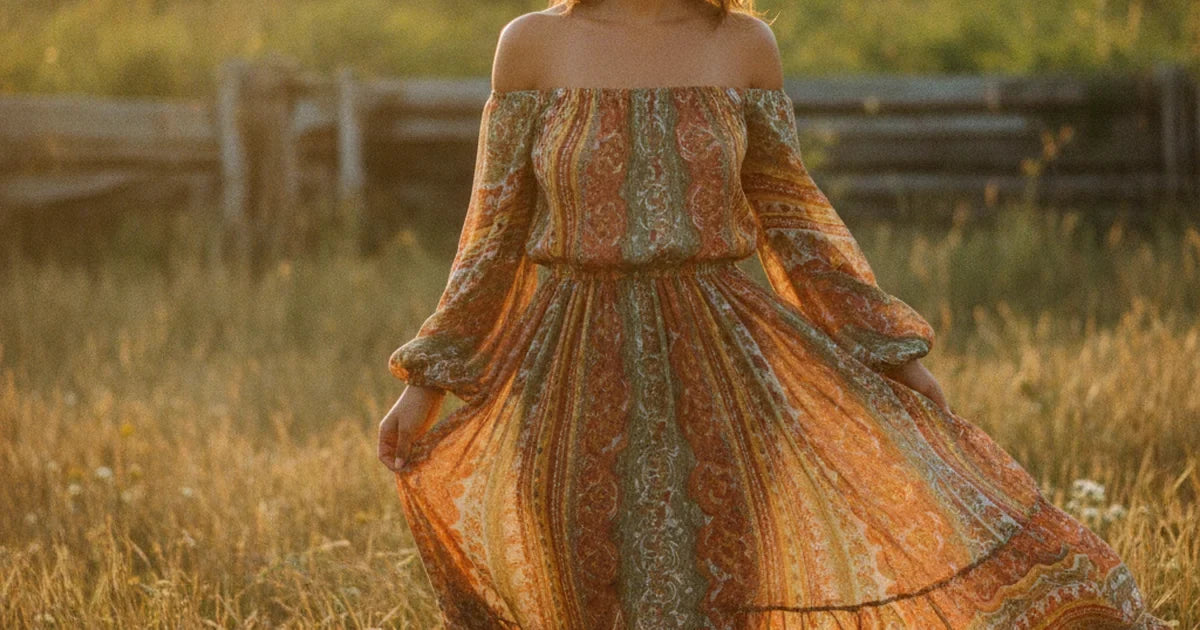
Long Bohemian Dress: How to Wear It in Style
✍️ Inès Morel 📅 July 30, 2026 🕐 6 min read The long bohemian dress is the flowing, feminine piece that embodies summer. Now all that's left is learning how to wear it. We'll guid...
Read more
School Pencil Case: Which Model Should You Choose for the New School Year?
✍️ Inès Morel 📅 July 30, 2026 🕐 6 min read The middle-school pencil case needs to hold everything, last all year, and appeal to the teenager. All that remains is to choose the ri...
Read more
Leopard Pouch: Dare to Wear Animal Print
✍️ Inès Morel 📅 July 30, 2026 🕐 6 min read The leopard-print pouch is a small accessory with plenty of personality. You just need to choose the right one and coordinate it well. ...
Read more
Leave a comment
This site is protected by hCaptcha and the hCaptcha Privacy Policy and Terms of Service apply.