

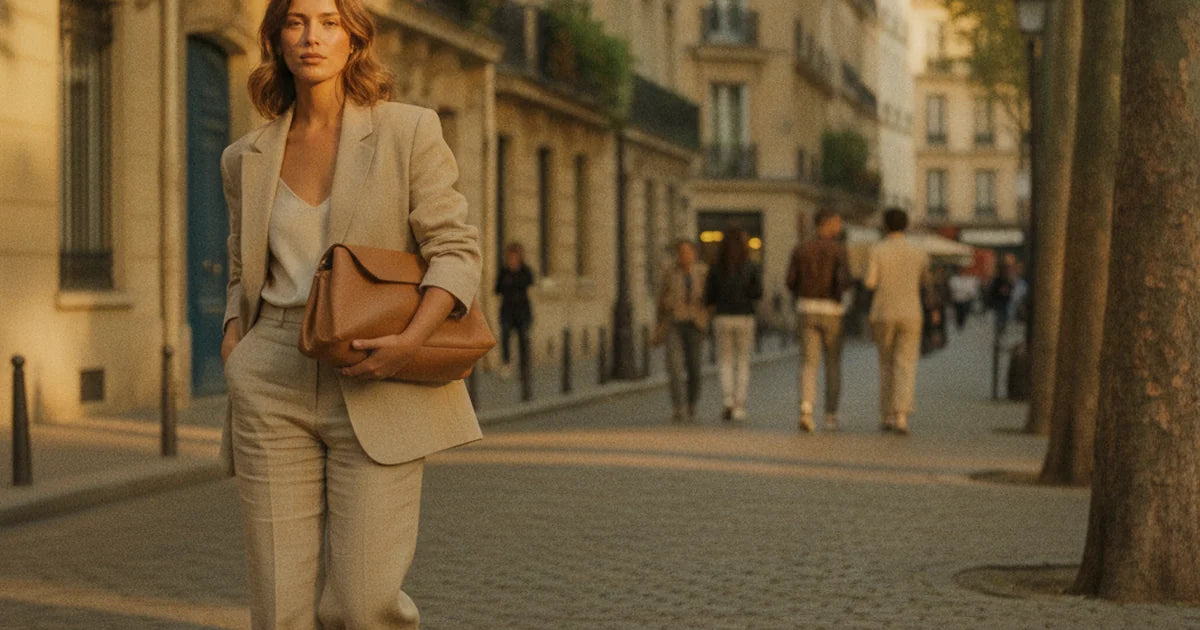
Women’s Leather Handbag: How to Choose and Care for It

A women’s leather handbag is a purchase that stands the test of time. You still need to know how to recognize quality leather and care for it properly. We’ll tell you everything.
A leather handbag isn’t an ordinary purchase. It’s a piece you keep for years, one that develops a patina and becomes more beautiful over time, instantly adding polish to an outfit. But not all leather is created equal, and the word covers very different realities—from leather that ages beautifully to leather that flakes after a single season.
Knowing how to recognize quality leather, choose it for your needs, and care for it: that’s what separates a good purchase from a disappointment. In this guide, we cover everything—and also share an alternative for those who want the look without the maintenance demands.
Why choose a leather handbag
Leather has qualities that no other material truly matches. It’s strong, ages beautifully, and gives an outfit a composed, polished look that synthetic materials struggle to imitate. A beautiful leather bag can last ten years, develop a patina from your use, and gradually become a piece that reflects who you are.
It’s also a sensible choice. Whereas a cheap bag may need replacing every year, a well-maintained leather bag stays with you for a long time—an initially higher investment that pays off over the years. Provided, of course, that you choose the right leather.
- Durable: quality leather lasts for years and can be repaired
- It develops a patina: it gains character over time
- Polished look: leather gives structure and elegance to an outfit
- An investment: more expensive to buy, but pays off over time
- The trade-off: it’s heavy and requires care
The downside is the weight and upkeep. A leather bag needs conditioning, protection from rain, and careful storage. For many, that’s part of the pleasure; for others, it’s a constraint—we’ll come back to that below.

The different types of leather
This is the heart of the matter: a bag’s quality depends first and foremost on the type of leather. Here are the main types, from the finest to the most basic, so you can understand what you’re really buying.
- Full-grain leather: the top layer, the most prestigious, retaining its natural grain and developing a beautiful patina — the premium choice
- Corrected-grain leather: sanded and then recolored to conceal imperfections, more uniform but less lively
- Pebbled leather: a pronounced, natural or embossed grain that hides everyday micro-scratches well
- Split leather: the lower layer, less durable and often coated — the entry-level option
- Suede / nubuck leather: velvety and elegant, but fragile and prone to stains
For an everyday bag that lasts, choose full-grain or pebbled leather: they withstand daily use and age beautifully. Nubuck is stunning but delicate, so reserve it for bags you handle with care.

A word about “genuine leather”: the label guarantees that it's real leather, but not its quality. An item can be made of “genuine leather” while still being coated split leather. Instead, look for the specific type of leather when it's indicated.
How to recognize quality leather
When looking at a bag, a few simple checks can help you assess the leather without being an expert. Take the time to touch it, smell it and examine it closely before buying.
- Smell: genuine leather has a warm, natural scent, never a smell of plastic or glue
- Feel: supple and lively, slightly irregular — an overly perfect, smooth grain often reveals embossing
- Edges: smoothly finished and dyed, a sign of careful craftsmanship
- Stitching: tight, even and straight, with no loose threads
- Flexibility: leather bends without cracking or becoming excessively pale
One final benchmark: the price. Genuine full-grain leather comes at a cost, and a “leather” bag sold at a very low price almost always contains coated split leather or synthetic leather. That doesn't make it a bad choice, but it's better to know this so you can buy with all the facts.
How to care for a leather handbag
That's the trade-off with leather: it's alive, so it requires attention. The good news is that a few regular steps are enough to keep it looking beautiful for years.
- Feed it two to three times a year with a suitable milk or cream to prevent it from drying out and cracking
- Protect it from rain with a waterproofing spray, and air-dry it if it gets wet, never near a heat source
- Treat stains promptly with a barely damp soft cloth—no large amounts of water or harsh products
- Store it stuffed with paper, in a breathable fabric bag, away from direct sunlight
- Avoid prolonged contact with raw denim that can transfer dye onto light-colored leather
With proper care, a leather bag can last and be passed down. But let's be honest: regular maintenance isn't for everyone or every use. If you're looking for a bag you can put through its paces without a second thought, there's an alternative.
The low-maintenance alternative: quilted cotton
Leather is gorgeous—but demanding. It fears rain, sand and stains, and weighs heavily on your shoulder. For those who want a polished-looking bag without all the precautions, quilted cotton is a genuine everyday alternative.
It captures what makes a beautiful bag appealing—the structure, padding and polished look—but in a washable, lightweight and incredibly durable material. Toss it in the washing machine, slip it into your suitcase; it fears neither water nor stains. The spirit of a beautiful bag, without the maintenance hassle.
- Machine washable: water, sand and stains are no match for it
- Lightweight: no dead weight on your shoulder, unlike leather
- Easy to live with: you can put it through its paces without feeling guilty
- Budget-friendly: an affordable treat, available in multiple prints
Our selection of easy-to-live-with bags
At Bokabas, we chose quilted cotton: the polished look of a beautiful bag, without a hint of upkeep. Our quilted pouches hold your essentials in a compact, chic format, wash with ease and come in a whole host of prints. Here are three of our favorite styles.
 The brown Leopard ruffled quilted pouch
19€
View product
The brown Leopard ruffled quilted pouch
19€
View product
 The green Retro ruffled quilted pouch
19€
View product
The green Retro ruffled quilted pouch
19€
View product
 The red Valentine ruffled quilted pouch
19€
View product
The red Valentine ruffled quilted pouch
19€
View product
Same compact size, same washable material, several prints to match your outfits: the choice is yours. And if you're hesitating between a small and a large size, our guide to choosing the right bag will help you decide.
Read also: How to Choose a Women's Tote Bag
In summary
A leather handbag is a purchase that lasts for years—as long as you choose the right leather and care for it properly. Keep the essentials in mind:
- The type of leather makes all the difference: full-grain or pebbled leather for durability; be wary of coated split leather
- “Genuine leather” guarantees real leather, not its quality—look at the specific type
- Quality markers: the smell, suppleness, smoothed edges, and tight stitching
- Care: condition it two to three times a year, protect it from rain, and store it carefully
- The hassle-free alternative: quilted cotton, polished yet washable and lightweight
Whether you fall for beautiful leather that develops a patina or quilted cotton you can handle without a second thought, what matters is choosing the bag that truly fits into your everyday life.

Women's Bags Collection
71 styles available
DISCOVER THE COLLECTIONFAQ — Women's Leather Handbags
How can you tell if a leather bag is genuine?
Trust your senses. Genuine leather has a warm, natural smell, never a plastic-like odor. To the touch, it is supple and slightly irregular—a grain that is too smooth and perfect often indicates a printed finish. Also look at the edges, which should be smoothed and dyed, and the stitching, which should be tight and even. The label “genuine leather” confirms that it is real leather, but not its quality level.
What type of leather should you choose for a handbag?
For a durable everyday bag, choose full-grain leather, the finest layer, or pebbled leather, which effectively conceals minor scratches. Split leather is less resistant and is an entry-level option. Nubuck and suede are elegant but delicate, so save them for bags you handle gently and take out less often.
How do you care for a leather handbag?
Condition the leather two to three times a year with a suitable milk or cream to prevent it from drying out. Protect it from rain with a waterproofing spray, and let it air-dry if it gets wet. Treat stains quickly with a barely damp, soft cloth, and store the bag stuffed with paper in a fabric cover, away from light.
Leather or fabric: which should you choose for a bag?
Leather offers a polished look and excellent durability, but it is heavy and requires regular care. Quilted cotton, on the other hand, delivers a neat look in a washable, lightweight, low-maintenance material, at a more affordable price. Leather is right for you if you enjoy watching a beautiful bag develop a patina over time; quilted cotton is ideal if you want an easy-to-live-with everyday bag.



Leave a comment
This site is protected by hCaptcha and the hCaptcha Privacy Policy and Terms of Service apply.