
Men's Travel Bag: The Complete 2026 Guide

Looking for the right men's travel bag? Duffle, weekender, cabin size, leather or canvas — this guide helps you find the perfect bag for your weekends and trips.
You're leaving for a weekend. You look at your suitcase. It's too much. You look at your backpack. It's too little. What you need is a men's travel bag — this hybrid size designed for 2 to 5 days, cabin-friendly, accompanies you everywhere, and doesn't make you look like a hiking tourist.
But between the €500 leather duffle, the €60 recycled canvas weekender, and the hybrid rolling bag, it's hard to know where to start. This guide gives you all the keys to choose THE men's travel bag that will accompany you for years. Types, materials, criteria, cabin sizes, styles — let's sort it out together.
What is a men's travel bag?
A men's travel bag is a soft bag, larger than a classic backpack, smaller than a hard suitcase. Its capacity ranges from 30 to 80 liters. It can be carried by hand, on the shoulder, or crossbody depending on the model.
Its purpose? To cover short trips: extended weekends, city trips, sports weeks, business trips. Basically, anything that doesn't justify a rolling suitcase but exceeds the capacity of a simple backpack.

Historically, this style comes from the military duffle bag and the sports bag. These two origins explain its cylindrical or soft rectangular shape, reinforced short handles, and large zippered opening on top.
Today, the men's travel bag has evolved. It has gained style, materials (full-grain leather, washed cotton canvas, recycled nylon), and features (laptop compartment, rear trolley strap pocket, detachable shoulder strap). It's no longer just a container — it's a full-fledged fashion accessory.
Why choose a bag over a suitcase
A bag is not just "less stuff than a suitcase." It's a different way to travel. Here are 4 reasons why you should have a men's travel bag in your closet, even if you already have a suitcase.
It fits everywhere
A hard suitcase gets stuck on stairs, bounces on cobblestones, and rattles in the subway. A soft bag, you sling it over your shoulder and go. You get on a train without hassle, jump into a taxi without maneuvering, and cross a crowded station without bulldozing through. For city or train travel, it's the perfect size.
It weighs half as much
A hard cabin suitcase weighs between 2.5 and 3.5 kg empty. A soft travel bag of the same capacity weighs between 800 g and 1.5 kg. Out of 10 kg allowed in the cabin, that's 1.5 to 2.5 kg more for your stuff. Just for that, the bag already wins.
It is more flexible
Leaving for 2 days? Fill it a third. Bringing back souvenirs? Stuff it. A soft bag adapts to what you put inside. A suitcase, on the other hand, has a fixed volume — half full, it still takes up all its space.
It has style
Let's be honest: a suitcase is functional. A beautiful men's leather travel bag or a cotton canvas weekender is a statement. It says something about you as soon as you put it on the counter. And it's an accessory you can also use daily — to go to the gym, leave for an unexpected weekend, or visit your parents.
The 5 types of men's travel bags
Not all travel bags are equal. Here are the 5 main categories, their uses, and what you need to know before choosing one.

The duffle bag
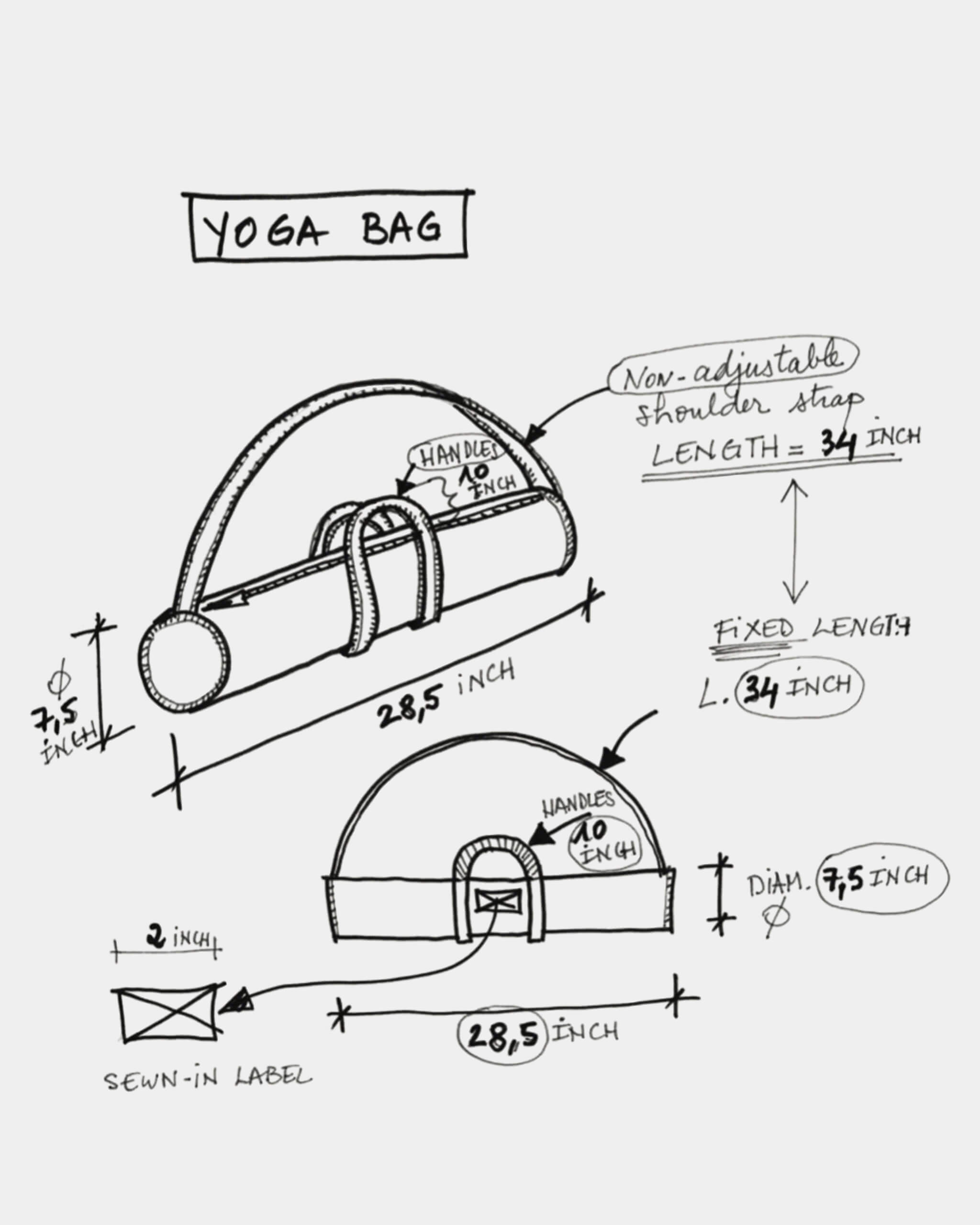
Cylindrical or soft rectangular shape. A large zippered opening on top. Two short handles + often a removable shoulder strap. This is the ultimate classic.
For whom? For those who like to pack quickly and go. No compartments = no hassle.
Typical capacity: 35 to 60 liters
Ideal use: weekend, sports, 2-4 day trip
Strong point: durability, volume, style
Weak point: limited interior organization (except recent models with zippered pockets)
The weekender
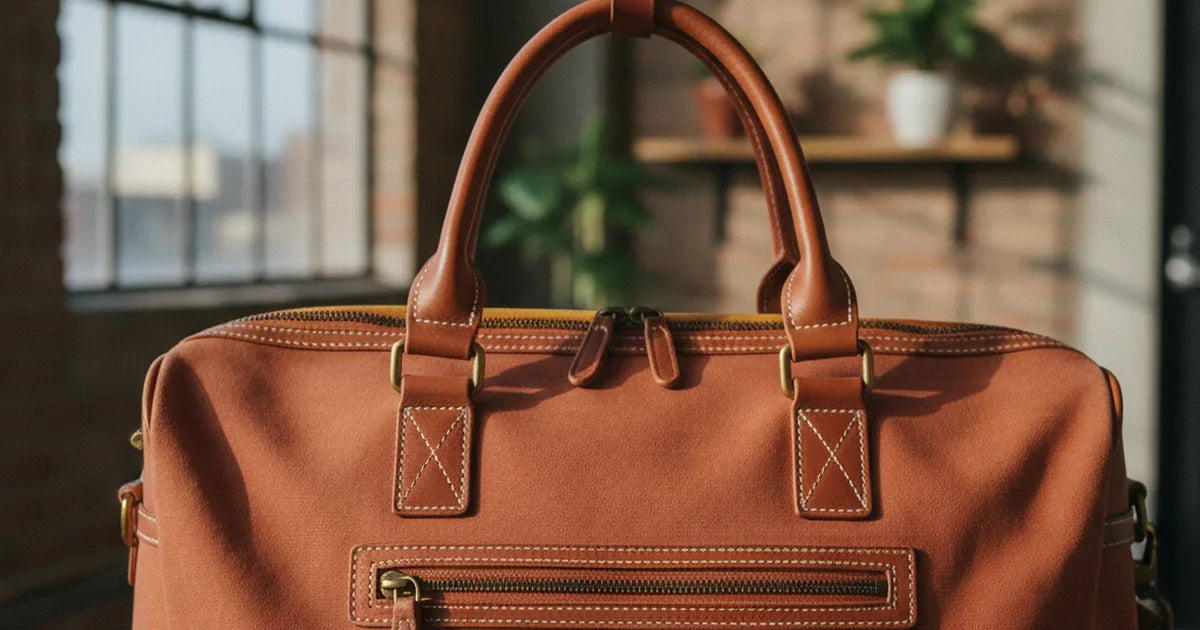
Flatter, more rectangular, with a central handle and two side handles. Often one main compartment + 2 to 4 organized inner pockets. This is the most "well-organized" weekend bag.
For whom? For those who want to pack quickly (shoes in a separate compartment, toiletries in a dedicated pocket, laptop in padding).
Typical capacity: 30 to 45 liters
Ideal use: urban weekend, short business trip
Strong point: organization, elegance
Weak point: smaller volume than a duffle
The travel backpack
30 to 60 liters, wide suitcase-style opening (not just from the top like a hiking bag), organized pockets, waist straps to distribute weight. The perfect compromise for those who walk a lot.
For whom? City trip with lots of walking, train travel with connections, urban adventure.
Typical capacity: 30 to 45 liters (cabin), 50-70 L (long trip)
Ideal use: backpacking, city trip, light trek
Strong point: both hands free, comfort over long distances
Weak point: less dressed up than a leather duffle
The hybrid travel bag (with wheels)
A mix between a suitcase and a bag. Wheels + telescopic handle + retractable backpack straps + shoulder strap. The traveler's Swiss army knife.
For whom? Those who don’t want to choose. You can roll it through the airport, carry it as a backpack in narrow alleys, or wear it crossbody on the train.
Typical capacity: 40 to 65 liters
Ideal use: multi-mode travel, frequent business trips
Strong point: total versatility
Weak point: heavier (2 to 3 kg empty), less elegant
The travel tote (giant tote)
A large reinforced tote bag, sometimes leather, often thick canvas. Less structured than a duffle but more chic than a backpack. Popular for short chic getaways.
For whom? Those who travel light, in the city, with a real dress code.
Typical capacity: 20 to 35 liters
Ideal use: 1-2 nights, minimalist travel, professional train trips
Strong point: impeccable style, versatile
Weak point: limited volume, less protected than a closed bag
The 6 criteria to choose your bag well
Beyond the type, here are the 6 criteria that make a bag perfect for you — or totally off.
1. Size (in liters, not cm)
We talk about bags in liters, not centimeters. That's the important measure. Here are the volumes corresponding to each use:
- 20-30 L : 1 to 2 nights, minimalist travel
- 30-40 L: 2-3 day weekend, airplane cabin size
- 40-50 L : long weekend, sports week
- 50-65 L : full week, long trip
- 65 L and up: long trip, expedition, family
Golden rule: for 90% of men's uses (weekend + workweek + city trip), a bag of 35 to 45 liters covers everything.
2. The material
Leather, canvas, cotton canvas, nylon, coated fabric, cotton-leather blend… Each material has its style, care, and lifespan. We'll detail this further below — but keep in mind: leather ages, canvas stains, nylon resists everything but looks less "stylish."
3. The closure
- Single zipper: fast, practical, the standard
- Double zipper (2 sliders): you can open from the left or right, and lock it for travel
- Flap + buckle: stylish, but slower to open
- Zipper + flap: the best for security and style
For a travel bag, always prefer the double lockable zipper. On a plane, train, or hotel — you'll thank yourself.
4. Pockets and compartments
- Shoe compartment: a side pocket that isolates shoes from the rest (very useful for sporty weekends)
- Laptop pocket: padded, ideally 15-16 inches
- Interior zippered pocket: for passport, boarding pass, keys
- Exterior pockets: for things to grab quickly (train ticket, charger, energy bar)
A good men's travel bag has at least 3 distinct compartments. Below that, you'll spend your life digging around.
5. Handles vs shoulder strap
- Two short handles (duffle style): practical for carrying by hand
- Removable padded shoulder strap: essential for long distances
- Retractable backpack straps: the cherry on top for long walks
The winning combo: two short handles + removable padded shoulder strap. You adapt depending on the situation.
6. The "trolley sleeve" strap
It's a rear strap, open on both sides, that lets you slide your bag over the handle of a rolling suitcase. A minor detail? No. As soon as you travel with a suitcase too, it changes everything.
Which material for your travel bag
The material determines the style, care, and lifespan of your bag. Here are the 5 main families — and for each, the profile it suits.

Full-grain leather
Top of the line. A men's full-grain leather travel bag lasts 20 years, ages well (develops a patina over time), and always looks stylish. Cowhide, buffalo, or calf leather are the most common.
For whom? Regular travelers, men who invest in pieces that last, classic or neo-vintage styles.
Budget: 200 to 600 € for good full-grain leather
Care: nourishing cream twice a year, avoid heavy rain
Lifespan: 15 to 30 years if maintained
Grain or oiled leather
Leather treated to be more water-resistant, with a more pronounced grain (a "rough" look). Perfect for those who want leather but dread having to pamper it every month.
For whom? Those who want the look of leather without the maintenance of natural leather.
Budget: 180 to 450 €
Care: damp cloth, nourishing once a year
Cotton canvas (500+ gsm)
Thick cotton canvas (500 grams per m² or more) is the fabric that made military bags. Ultra durable, slightly water-resistant, develops a beautiful patina over the years. It's the best compromise of style / price / durability.
For whom? Those who want a nice bag without spending €400. Casual, workwear, heritage styles.
Budget: €60 to €180
Care: dry brush, stain = damp sponge, gentle wash at 30°
Lifespan: 10 to 15 years
Ballistic or technical woven nylon
The champion of durability. 1680D nylon or Cordura, waterproof or water-repellent, lightweight, indestructible. More "technical" look, less warm than leather or canvas.
For whom? Frequent travelers, adventurers, pros who chain trips in all conditions.
Budget: €80 to €250
Care: almost zero, washable
Lifespan: 10 to 20 years
Recycled / eco-friendly materials
Recycled canvas, recycled nylon (ECONYL), vegan leather made from plant fibers. The new generation. Quality level rises every year — some recycled nylon bags rival classic ballistic nylon.
For whom? Those who want to buy better without sacrificing style.
Budget: €100 to €300
Care: depends on the material, often simple
Natural materials, boho patterns, contemporary cut — coming soon
What size for which trip
Not sure which capacity to choose? Here's the guide by trip length.
| Duration | Ideal capacity | Recommended type | What you pack |
|---|---|---|---|
| 1 night | 20-25 L | Catch-all, cabin bag | 1 change, minimal kit, chargers |
| Weekend (2-3 days) | 30-40 L | Weekender, M duffle | 2-3 changes, toiletries, secondary shoes |
| Week (5-7 days) | 45-55 L | L duffle, XL cabin bag | 5+ changes, sports gear, extra jacket |
| Long trip (10+ days) | 60-80 L | Travel backpack, XL duffle | Everything + technical gear, multiple shoes |
| Weekly sport | 30-40 L | Sport duffle | Outfit + shoes + towel + shower |
↔ Swipe to see the chart

Practical advice: always choose one size smaller than what you think you need. A bag that's too big, you'll fill it just to fill it. A bag that's "just right," you'll learn to travel light — and your back will thank you.
Cabin travel bag: what you need to know
The rule changes depending on the airline, but here are the standard cabin dimensions that men's travel bags must comply with:
- Low cost (Ryanair, Wizz Air): 40 × 20 × 25 cm, max 10 kg (often charged if larger)
- Traditional Europe (Air France, Lufthansa): 55 × 35 × 25 cm, max 8-12 kg
- Long-haul Asia/US: 56 × 36 × 23 cm, max 7 kg
Corresponding capacity: most bags labeled "cabin" are between 30 and 40 liters to meet strict size limits.
The 3 rules to always get your bag in the cabin
- Choose soft, not rigid. A soft bag compresses, adapts to the compartment. A rigid 40 L bag can be refused when a soft 45 L will pass without problem.
- Avoid cylindrical bags for the cabin. Round duffles don’t fit in the measuring bins — prefer a flat rectangular shape.
- Test your bag full, not empty. A 45 L bag full takes 2 to 3 cm more than empty. Margin = peace of mind.
The perfect cabin travel bag
- Volume: 35-40 L
- Dimensions: max 55×35×25 cm
- Empty weight: under 1.5 kg
- Rear trolley strap
- Double lockable zipper
- 15.6" laptop compartment
- Removable padded shoulder strap
If you’re aiming for the one bag for all your trips without a doubt, this is the spec you need.
How to wear your travel bag with style
A beautiful bag isn’t everything. Here’s how to wear it so it boosts your look instead of weighing it down.

Casual weekend look
Raw denim jeans + white t-shirt + V-neck sweatshirt + clean sneakers + cognac canvas travel bag held by hand. The combo that works everywhere — from the Paris-Bordeaux TGV to a weekend at friends'. The key: a bag in a warm color (cognac, camel, olive) that warms up a rather neutral look.
Business travel look
Chino pants + light blue oxford shirt + unstructured blazer + derbies or loafers + black or dark brown leather weekender. For business trips where you need to show up presentable straight to a meeting. One bag for the office + hotel night = zero hassle.
City trip look
Slim jeans + thin sweater + light bomber jacket + stylish sneakers (not running shoes) + black or gray canvas travel bag. The look for strolling around Lisbon, Copenhagen, or Berlin without looking like an American tourist. You stay urban, you stay mobile.
Explorer / adventure look
Straight cargo pants + plain t-shirt + work shirt + boots or sturdy sneakers + technical travel backpack. For multi-mode trips, cities with hills (Lisbon, San Francisco), countries where you'll be walking. Comfort comes first.
Chic minimalist look
All beige / ecru / black look + black leather catch-all. For 24-48h city trips to places where you want to arrive stylish. Works 10/10 for romantic weekend getaways in atmospheric hotels.
The 5 mistakes to avoid
Some common pitfalls when choosing a men’s travel bag. Avoid them and you’ll make your life easier.
1. Choosing too large “just in case”
The classic reflex. You hesitate between 40 and 60 L, you take 60. Mistake. A bag that’s too big, you fill it just to fill it. You go on a weekend with 7 t-shirts when you only need 3. Result: you carry unnecessary weight. Always choose a slightly smaller size — you’ll learn to travel light.
2. Saving money on the zipper
The zipper is the first part to fail on a bag. If the zipper breaks, your bag is ruined — or at least annoying to use. Always check: YKK zipper (the global standard), double slider, sturdy pulls. A €150 bag with a YKK zipper will last twice as long as a €120 bag with a no-name zipper.
3. Neglecting the shoulder strap
Many bags come with a thin synthetic strap. Poorly padded, it cuts into your shoulder after 20 minutes. Check before buying: wide strap (at least 4 cm), padded, and especially removable — otherwise it will always be dangling.
4. Choosing a color that’s too light
Beige or white travel bag = bag that will get dirty after 3 trips. Airport, train, dirty floors, subway footrests… Prefer medium to dark tones (cognac, camel, charcoal gray, navy blue, olive green, black) which better withstand time and stains.
5. Forgetting cabin compatibility
If you fly at least once a year, check cabin dimensions before buying. A 50 L bag is often just too big for low-cost airlines. A 40 L bag fits almost everywhere. Those 10 L less can save you €30 in checked baggage fees per flight.
How to care for your travel bag
A well-maintained bag lasts 3 to 5 times longer than an abandoned one. Here are simple care tips, depending on the material.
For leather
- Every 2-3 months: wipe with a dry cloth to remove dust
- Twice a year: apply a nourishing cream (like Saphir or Famaco), let absorb for 10 minutes, then polish
- After rain exposure: air dry (never on a radiator), then nourish within 48 hours
- Stain: slightly damp cloth, dab without rubbing
For cotton canvas
- Regular dry brushing to remove dust
- Stain: damp sponge + Marseille soap, dab gently
- Full wash: only if the manufacturer indicates, delicate cycle 30°, air dry
- Waterproofing (Collonil spray or equivalent) every 6 months for trips in wet conditions
For nylon
- Damp cloth + mild soap, that's all
- Machine wash possible on delicate cycle if indicated
- Drying: in open air, never in a dryer (it deforms the structure)
Storage between trips
- Never folded tightly (it marks the leather, creates lasting creases on canvas)
- Fill the inside with bubble wrap or an old sweater to maintain shape
- In a cotton dust bag (not plastic, which traps moisture)
- In a dry place, away from direct light
FAQ — Everything to know about men's travel bags
Which men's travel bag to choose for a 2-day weekend?
For a 2-day weekend, aim for a 30 to 40-liter bag. A canvas or grained leather weekender is the perfect size. You can fit 2 complete outfits, your toiletry bag, an extra pair of shoes, and your charger — without it being too heavy.
What is the ideal size for a cabin bag on a plane?
Standard cabin dimensions are 55 × 35 × 25 cm for traditional airlines, 40 × 20 × 25 cm for strict low-cost airlines (Ryanair). In capacity, count on 35 to 40 liters for a bag that fits easily in both cases. Aim for a soft, rectangular shape rather than cylindrical.
Is it better to have a leather or canvas bag?
It depends on your use and budget. Leather (€200-600) is more elegant, lasts 20+ years, develops a beautiful patina, but requires regular care and fears heavy rain. Canvas (€60-180) is more casual, more water-resistant, cheaper, but ages less gracefully. For a first men's travel bag, canvas often offers the best value for money.
How to choose the size of a men's travel bag?
Depends on your travel duration and type. 20-30 L for 1-2 nights, 30-45 L for a weekend, 45-55 L for a week, 60+ L for long trips. Better to have a slightly small bag than one too big — if the bag is too big, you fill it unnecessarily.
Backpack or travel bag for a city trip?
For a city trip with a lot of walking and transfers, the travel backpack (30-45 L) is superior: both hands free, weight distributed on the back, accessibility to front pockets. For a more relaxed city trip with less walking, a duffle or weekender offers more style and comfort for short distances.
Can a travel bag be carry-on on a plane?
Yes, provided it meets your airline's size requirements. Most men's travel bags labeled "cabin" are 30 to 40 liters, measure max 55×35×25 cm, and weigh less than 1.5 kg empty. Always check your airline's exact dimensions before buying — low-cost carriers have stricter rules than traditional ones.
Which travel bag to take to the gym 3 times a week?
A 30-40 liter sports duffle with a separate shoe compartment (ventilated side pocket) and an inner zip pocket for wet items. Choose an easy-to-clean material: technical nylon or canvas. Also plan for a padded shoulder strap if you have to walk or take the subway.
What budget for a good men's travel bag?
For a bag that lasts 10+ years, expect to pay between €100 and €250 for a good canvas or grained leather model. Below €80, the quality of zippers, stitching, and material is usually insufficient. Above €400, you mostly pay for the brand and top-grain leather — relevant if you travel a lot, less so if you travel three times a year.
How to care for a leather travel bag?
Dust off with a dry cloth every month. Apply a nourishing cream (like Saphir Renovator) twice a year. Avoid prolonged exposure to rain and direct sunlight. If the bag gets wet, let it air dry (never near a heat source) then nourish it within 48 hours. Store in a cotton dust bag, filled to maintain shape.
Can I use a men's travel bag daily?
Yes, absolutely — it's even an excellent investment. A 30-35 L leather weekender or tote perfectly serves as a "work bag + gym bag + Saturday shopping bag" between trips. It's even one of the strong points compared to a suitcase: you can use it 250 days a year instead of leaving it in the closet.
The Bokabas collection is coming
We are working on a collection of men's travel bags designed for everyday use: washed cotton and linen materials, contemporary cut, bold boho touches. The Bokabas spirit — patterns, colors, character — applied to the men's range.
While waiting for the drop, you can:

Bokabas gift card
€10
VIEW PRODUCTSlip a gift card into your travel list — you or your partner can turn it into a Bokabas accessory as soon as the collection drops.
Men's travel bag collection
16 models available
DISCOVER THE COLLECTION---




Leave a comment
This site is protected by hCaptcha and the hCaptcha Privacy Policy and Terms of Service apply.