

Yoga mat bag: which one to choose based on your practice?
To easily carry your mat, keep your belongings clean, and move smoothly between home, the studio, and outdoors: that's the role of a well-designed yoga mat bag. Between sizes, materials, closure types, and carrying comfort, there are real differences that change the daily experience—especially if you practice intensively, travel often, or use a thick mat. This guide helps you choose the ideal model based on your practice, with a focus on handmade cotton bags for combining style, durability, and textile breathability.
Criteria to check (size, material, closure, shoulder strap)
Before falling for a color or pattern, validate the essentials. A good bag is first and foremost one that fits your mat and your practice habits, without compromising on durability and comfort.
1) Size & internal volume: what exactly to check?
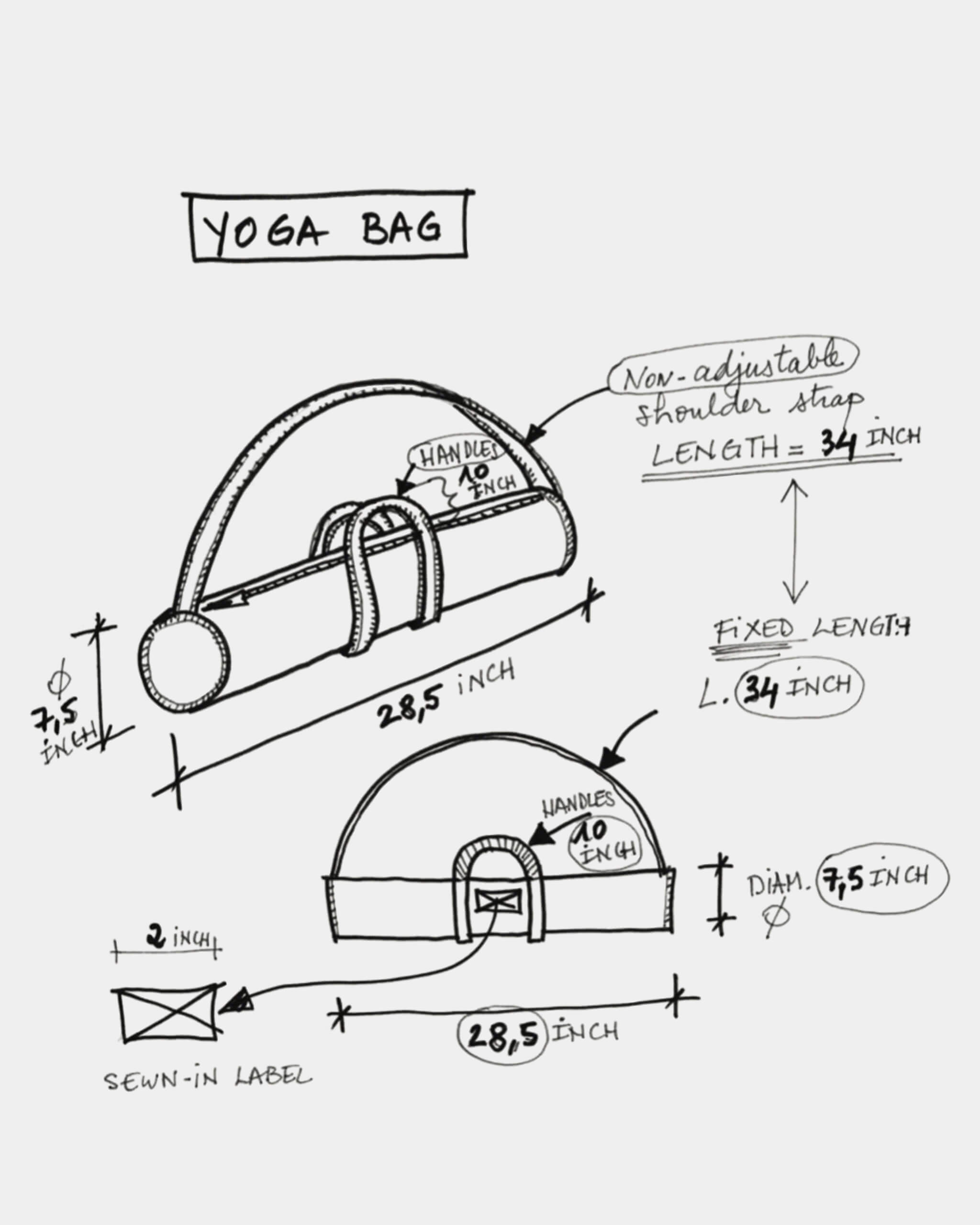
- Internal length: it must exceed the width of your rolled mat by 3–5 cm for smooth insertion. Example: 66 cm wide mat → internal length 69–72 cm minimum.
- Diameter (or gusset): this is the determining factor for thick mats (rolled diameter 12–15 cm). Check for "compatible with thick mats" or the bottom measurement.
- Opening: a side zip opening along the length facilitates the entry/exit of dense mats; a drawstring works very well for thin to medium mats.
| Parameter | Thin mat | Standard mat | Thick mat |
|---|---|---|---|
| Mat width | 61–63 cm | 64–68 cm | 64–68 cm |
| Rolled diameter | ≈ 9–11 cm | ≈ 11–13 cm | ≈ 13–15 cm |
| Bag internal length | ≥ width + 3 cm | ≥ width + 3–5 cm | ≥ width + 5 cm |
| Recommended opening type | Drawstring (top) | Drawstring or zip | Side zip + gusset |
2) Materials: breathability, maintenance, hold
The choice of fabric has a direct impact on hygiene (post-session dampness), longevity, and aesthetic appeal. The most common options:
- Cotton (canvas or quilted): breathable, pleasant to the touch, easy to wash. Ideal for wicking away moisture after a dynamic session.
- Light technical fabric: featherlight and quick-drying; sometimes less elegant but very practical for daily sport.
- Coated materials: good rain protection; however, pay attention to ventilation (prefer eyelets/mesh).
- Linen or natural blends: chic and durable texture, gentle care (delicate wash).
3) Closure: ease of use and security
- Drawstring: ultra-simple, robust, nothing to adjust; perfect for thin/standard mats.
- Zip: effortless insertion/removal, especially for thick or sticky mats; choose a quality zipper (smooth slider, clean ends).
- Zip + flap mix: more structured look, very practical when on the move (bike/metro).
4) Shoulder strap and carrying
- Adjustable: to switch from shoulder to crossbody.
- Width 3–4 cm: prevents the "rope" effect that digs into bare skin.
- Shoulder reinforcement: essential for dense mats or walking commutes.
- Anchoring points: solid stitching, interior reinforcements, stable metal rings.
5) Pockets & organization
An external zipped pocket (phone, keys, debit card) + an internal mesh pocket (strap, non-slip socks) changes everything. Useful bonus: a loop for a slim water bottle or a compartment for a microfiber towel.
- Internal length ≥ mat width + 3–5 cm
- Diameter/volume compatible with thickness
- Breathable material (or ventilation) + simple care
- Adjustable and comfortable shoulder strap
- At least one secure zipped pocket
- Robust closure (drawstring/zip) that doesn't snag
Bags for thick vs. thin mats
The difference isn't just a matter of weight: a dense mat (e.g., 6–8 mm high-density foam or thick natural rubber) has a significantly larger rolled diameter. This dictates the type of opening, the volume, and even the weight distribution on the shoulder.
Thin mats (≈ 2–4 mm): maximum mobility
- Recommended bag: cotton/linen tube with drawstring, moderate diameter, smartphone pocket.
- Advantage: low overall weight → standard shoulder strap sufficient.
- Caution: thin mats can slip in a very smooth bag → prefer a slightly "grippy" cotton lining.
Standard mats (≈ 4–6 mm): balance
- Recommended bag: breathable cotton canvas, zip or drawstring; generous internal length (61–66 cm wide mat → 65–71 cm bag).
- Advantage: wide compatibility, simple maintenance, various carrying options.
- Caution: overly thick pockets can hinder the mat's rolling inside → prioritize flat pockets.
Thick mats (≥ 6–8 mm or dense rubber): comfort, but bulk
- Recommended bag: full-length side zip + gusset or wide bottom (13–15 cm diameter), wide shoulder strap with reinforcement.
- Advantage: effortless insertion/removal, well-distributed weight, dedicated accessory pockets.
- Caution: ventilation essential after hot yoga or intense sessions (eyelets, mesh areas, breathable cotton).
| Mat type | Recommended opening | Diameter/volume | Carrying | Notes |
|---|---|---|---|---|
| Thin (2–4 mm) | Drawstring | Low (≤ 11 cm) | Standard shoulder strap | Ultra-light, dual use bag + roll-strap possible |
| Standard (4–6 mm) | Drawstring or zip | Medium (11–13 cm) | Adjustable shoulder strap | The versatile "sweet spot" |
| Thick (≥ 6–8 mm) | Side zip | Large (13–15 cm) | Wide + reinforcement | Ventilation + flat pockets recommended |
What about a simple carrying strap (without a bag)?
The strap is ultra-minimalist and sufficient for very short trips with a dry mat. But as soon as there's rain, dust, transport, shared changing rooms, or accessories to carry, the yoga mat bag clearly regains the advantage (cleanliness, discretion, centralized storage).
Focus on artisanal cotton bags
If you're looking for a balance between aesthetics, comfort, and durability, artisanal cotton is a safe bet. Breathable, naturally pleasant to the touch, it ages well and is easy to wash. At Bokabas, we work with cotton canvas and block prints inspired by Indian craftsmanship, for bags that are both functional and unique.
Why cotton is ideal for yoga
- Textile breathability: wicks away residual moisture from the mat after practice.
- Simple care: wash at 30 °C (zip closed), air dry; localized stains treated with mild soap.
- Feel & hold: pleasant hand feel, not "plastic-like", retaining the mat's shape well.
Artisanal design: details that matter
- Canvas sufficiently dense for hold, tightly woven cotton lining for cleanliness.
- Quality zip (metal or premium nylon), smooth slider; or thick drawstring with reliable stopper.
- Wide shoulder strap, reinforced anchoring points, regular stitching.
- Flat zipped pockets (phone/card/key), internal mesh pocket (strap/socks).
Style & identity: sobriety or blockprint patterns
Depending on your universe, opt for a solid color (ecru, charcoal, sage, navy) that's easy to coordinate, or a discreet blockprint that makes the item unique without overdoing it. "Yoga chic" is about balance: a fine print + sober hardware = a graphic but timeless bag.
Durability & repairability
A well-made cotton bag is repairable: replaceable zipper slider, restitched handle, changed eyelet. This is not always the case with glued synthetic materials. This is a major advantage over time, both for the budget and for the environmental footprint.
Minute procedure: measure your mat and confirm compatibility
- Measure your mat's width (flat): 61, 66, or 68 cm are classic values.
- Roll the mat "tightly but without forcing" and measure the diameter: note it down (e.g., 12.5 cm).
- Choose the bag's internal length: width + 3–5 cm (e.g., 66 cm mat → 69–71 cm bag).
- Choose the volume: internal diameter ≥ rolled diameter + 0.5–1 cm margin.
- Validate the opening: side zip if a thick mat; drawstring if a thin/standard mat.
- "Wet hand" test: if your practice is intense, prioritize breathable fabric or ventilation eyelets.
Care & best practices
Washing and drying
- Cotton: 30 °C, zip/drawstring closed, washing bag recommended; flat drying or on a wide hanger, in the shade.
- Technical fabrics: short cycle, no fabric softener (alters water repellency), air dry.
- Stain removal: mild soap on localized stain, rinse, wring without twisting.
Zipper/drawstring care
- Zip: dust the teeth (soft brush). Graphite (pencil lead) or a hint of beeswax to restore smooth sliding.
- Drawstring: check the stopper, re-tie a knot if needed, trim and cauterize braided ends.
Mat hygiene in the bag
Let it dry for 10–15 minutes in the open air after practice before inserting it. For immediate travel, slide a microfiber towel around the mat to absorb moisture: your bag will stay fresh longer.
FAQ — Yoga mat bag
How do I know if a bag is compatible with my mat?
Measure the width of the mat (flat) and add 3–5 cm for the internal length of the bag. Measure the diameter of the rolled mat: choose a bag whose internal diameter is at least equal + 0.5–1 cm margin.
Should I prefer a zip or a drawstring?
A drawstring is perfect for thin to standard mats: simple, durable. A side zip is recommended for thick mats (smoother entry/exit). If you cycle, a zip offers better security.
Is a breathable bag really useful?
Yes, especially after intense sessions: cotton or ventilation eyelets prevent "trapping" moisture, which limits odors and bacteria.
Can I machine wash my yoga mat bag?
Most cotton/canvas bags can be washed at 30 °C, with the zip closed, in a laundry bag. Air drying is recommended. Always check the care label.
Which pockets are really useful?
An external zipped pocket for keys/phone + an internal mesh pocket for a strap/towel. Bulky pockets unnecessarily stiffen the bag.
Does a cotton bag hold up in the rain?
It protects during a short shower. For long journeys in the rain, prefer a water-repellent cover or a treated double-layered cotton model, or store the bag in a waterproof tote during the trip.
Conclusion & recommendation
The "best" yoga mat bag is one that suits your equipment and rhythm: just the right internal length, adapted diameter, breathable fabric, smooth closure, comfortable shoulder strap. Handmade cotton bags offer a rare balance between aesthetics, simple care, and repairability—all while keeping your mat fresh and ready for the next session. In the studio, outdoors, or on the go, choose a practice companion that makes every transition smoother and more elegant.
Want an artisanal and durable bag? Discover Bokabas cotton models: breathable fabrics, sturdy zips or comfortable drawstrings, useful pockets, and careful finishes—designed to accompany your practice, from morning to night.

Written by Lucas Guillaud




Leave a comment
This site is protected by hCaptcha and the hCaptcha Privacy Policy and Terms of Service apply.