
Long Women's Jacket: The Complete 2026 Guide

Looking for THE right long women's jacket? Classic trench, winter coat, long kimono, oversized blazer, sleeveless vest — we help you find the long jacket that structures your silhouette and matches your wardrobe.
You put on jeans. A blouse. You grab your long jacket. It makes you look shorter. You switch to your trench, it doesn't close well at the chest. You take your coat, it's too warm for the season. You go out without a jacket. Classic.
A well-chosen long women's jacket is the accessory that structures a silhouette without hiding it. It adds visual authority, elongates the silhouette if well cut, and protects you when it's chilly. But between the mid-season trench, the winter coat, the long boho kimono, the oversized blazer, and the long sleeveless vest, how do you choose THE right one? This guide gives you all the keys.
What is a long women's jacket?
A long women's jacket is a jacket that stops between mid-thigh and mid-calf (more rarely at the ankles for extra-long coats). Its particularity is its length, which completely changes the perception of a silhouette compared to a short or mid-length jacket. It "dresses up" more, adds authority, structures the torso more, and plays an important role in warmth during winter.
Historically, the modern long jacket originates from the British military trench coat (reinvented by Burberry in the 1900s), the long winter coat (pea coat, frock coat), and the Japanese kimono. Today, the market is very diverse: classic trench, wool winter coat, double-breasted coat, long kimono, oversized long blazer, long sleeveless vest. In short, there is a long jacket for every season and every style.

Its purpose, then: to combine protection and structure. For women who love structured silhouettes and are looking for a winter coat, or for those who want a "dressy" piece to wear over neutral bottoms. Its versatility varies depending on the type — a trench coat is very versatile, a winter coat is more seasonal.
Why choose a long jacket
Before you have a good one, you wonder if "it will suit me." Three try-ons later, you know. Here are the four concrete reasons why the long jacket makes a real difference.
It adds visual authority
This is the number one point. A well-cut long jacket immediately gives a poised, structured, mature silhouette. It’s the piece that makes you look like you stepped out of a magazine effortlessly. It’s especially suitable for formal professional settings and dressy outings.
It protects effectively against the cold
It’s also a coat, so real thermal protection in winter. A long wool or cashmere coat is far warmer than a short jacket. It covers the lower back and half the thighs — areas a short jacket leaves exposed.
It hides what you want to hide
If you want to hide your lower body (legs, hips) to highlight your face and shoulders, a long jacket is unbeatable. You structure the top and let the bottom fade into the background.
It can elongate your silhouette (if well chosen)
Counterintuitive but true: a well-cut long jacket (neutral color, vertical line, slight waist shaping) can elongate your silhouette by creating a continuous vertical line. A poor cut can make you look shorter. It’s all about the cut and color.
The 6 types of long jackets
Not all long jackets are equal — nor worn the same way. Here are the six main types, with their uses, strengths, and limitations.

The trench coat (gabardine)
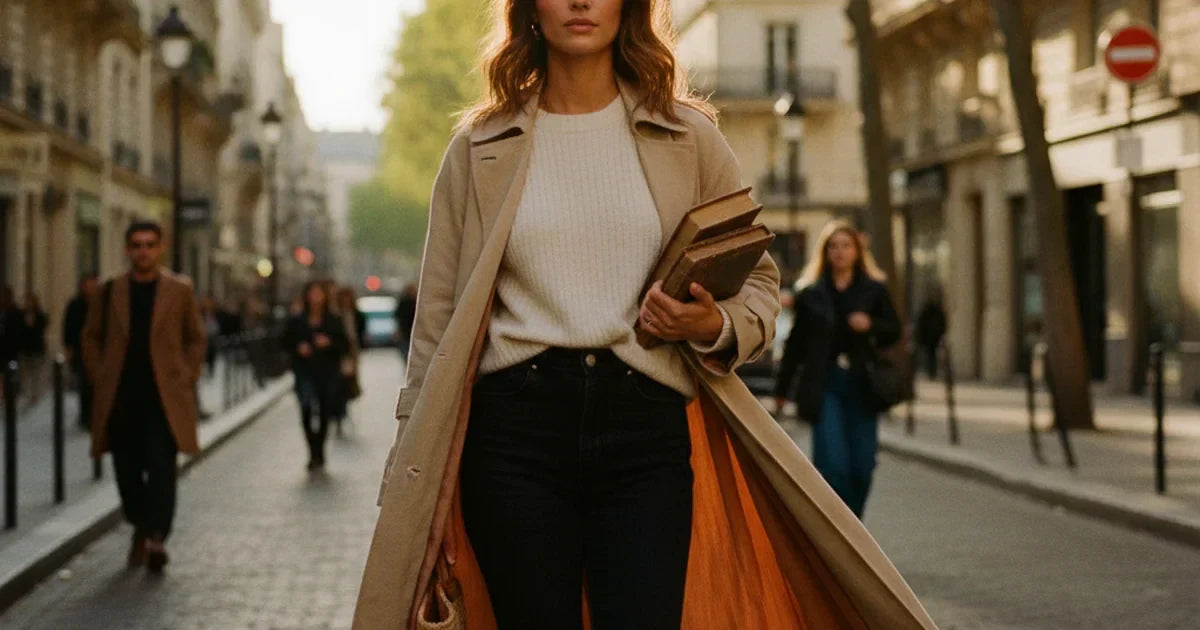
The classic mid-season piece par excellence. Gabardine fabric (tightly woven cotton), mid-calf length, belt tied at the waist, double-breasted crossover, high fold-down collar. The "English detective" look that spans decades.
- Cut: straight or slightly flared, cinched at the waist with a belt
- Ideal for: mid-season (spring, autumn), any setting (professional, city, weekend)
- Strength: absolute versatility, natural water resistance, understated elegance
- Note: not for very cold weather, higher price for quality
It’s the number one classic investment for long jackets. Aim for a sand beige or khaki color rather than black — more versatile and less formal. Expect 100-300€ for real quality (thick gabardine, lining, waxed thread seams).
The double-breasted winter coat
Extra-long format (mid-thigh to mid-calf), wool or wool blend, double-breasted with belt or button closure. The "true winter" coat that keeps warm and structured.
- Cut: fitted or straight, double-breasted front
- Ideal for: winter, professional settings, city in cold season
- Strength: maximum warmth, visual authority, lasts 15-20 years
- Note: high price (200-600€), care (dry cleaning)
Preferably in camel, anthracite gray, or navy for versatility. Avoid basic black that blends with everything. A beautiful double-breasted wool coat is the most cost-effective wardrobe investment over 10 years.
The long kimono
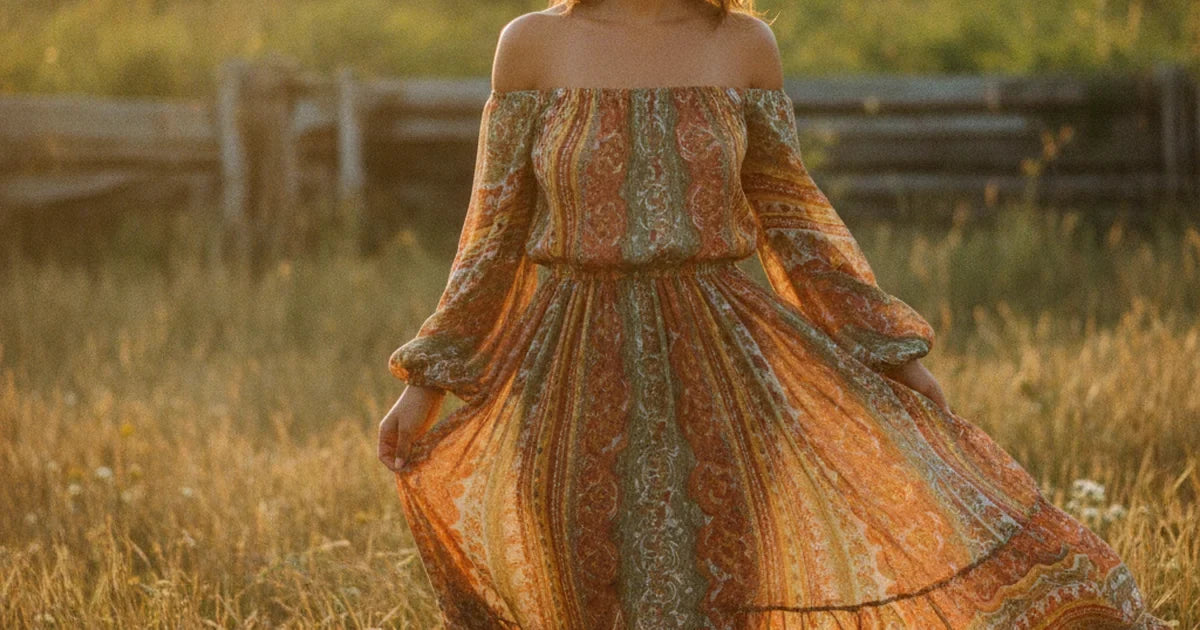
Long fluid format (mid-thigh to mid-calf), printed silk or viscose material (flowers, ethnic patterns, paisleys), collarless, open front. Boho-chic or unique contemporary vibe.
- Cut: very fluid straight, open kimono
- Ideal for: spring-summer, weekend outings, contemporary boho vibe
- Strength: unique look, versatile with dresses/jeans, strong aesthetic
- Note: not warm, seasonal look (spring-summer)
Preferred style for boho-chic profiles. Choose a print that isn’t too loud — stylized flowers, subtle paisleys, geometric. Avoid ultra-seasonal patterns that go out of style quickly.
The long oversized blazer
Long format (mid-thigh), wool or structured polyester blend, oversized cut at the shoulders with a straight open front. The "XL blazer" version that extends the classic blazer.
- Cut: oversized at the shoulders, straight down
- Ideal for: contemporary professional looks, dressed creative settings
- Strength: relaxed look without corporate formality, versatile
- Note: can weigh down the silhouette if too oversized
Preferably in black, navy, or burgundy. Avoid ultra-oversized versions that make you look smaller. Aim for a cut with a bit of waist shaping (often with a removable belt).
The long sleeveless vest
Long format (mid-thigh), wool material, knit, or quilted, sleeveless, open front. The ultimate layering piece — to wear over a sweater, shirt, or dress.
- Cut: straight, sleeveless
- Ideal for: mid-season, layering, casual looks
- Strong point: easy layering, versatile for mid-season, casual chic vibe
- Note: no warmth on the arms
Preferred format for fall/spring transition. To wear over a turtleneck, shirt, or even a long dress.
The pea coat / parka
Mid-length format (just above the knee), thick wool material (pea coat) or technical polyester with hood (parka). The "functional" coat that really keeps you warm.
- Cut: structured, straight, snap or button closure
- Ideal for: functional winter, city and countryside, all weather
- Strong point: warmth, durability, professional/personal versatility
- Note: less formal look than the classic double-breasted coat
Preferably in navy, military khaki, or black. This is the coat that "doesn't break the bank" and lasts easily 8-10 years.
The 7 criteria for choosing well
Beyond the type, here are the seven criteria that make a long jacket perfect for you — or disappointing after one season.
1. The exact length
This is THE criterion for a "long" jacket. It should end between mid-thigh (above the knee) and mid-calf. If you aim for longer (ankle), that’s an extra-long coat. Shorter = mid-length jacket (above mid-thigh).
2. The waist cut
Belted (trench) or seam-fitted (double-breasted coat): defines the waist, feminizes. Straight: structures the bust, fluid for H-shaped bodies or those who prefer comfort. Oversized: contemporary look, but can shorten a petite silhouette.
3. The shoulders
Should be aligned with your natural shoulders — not too droopy (looks "too big"), not too square (looks like "coach shoulders"). For long oversized blazers, the shoulder seam can drop slightly, but no more than 2-3 cm outside your natural shoulder.
4. The closure
Buttons: classic, elegant, slow opening. Double-breasted + belt: very chic, perfect trench and coat. Zip: modern, sporty, casual. Open (no closure): kimono or long cardigan, relaxed.
5. The material
Must correspond to the main season. Wool or wool blend = winter. Cotton gabardine = mid-season (trench). Cashmere or wool cloth = chic winter. Technical polyester = all-weather parka. Printed silk or viscose = spring-summer kimono.
6. Details and finishes
Look at the inner lining (leather, silk, viscose for chic; technical polyester for practical). The seams (regular, fine, waxed thread for good pieces). The buttons (genuine horn for very chic, plastic for entry-level). The finishes (cuffs, collar, pockets) that make the difference between an 80€ jacket and a 250€ one.
7. Consistency with your wardrobe
You will wear it 100+ days a year. If it doesn’t match your usual bottoms (jeans, skirts, dresses), it will stay in the closet. Before buying, take inventory of 5 complete outfits you can really wear it with — including shoes.
What length according to your body shape
The right length varies according to your body shape. Here is a practical reference.
If you are short (under 1.65m)
Favor a jacket that stops above the knee (at most upper calves). Avoid extra-long coats that will visually shorten you. A mid-thigh trench or a long oversized blazer just above the knee works very well. Aim for vertical cuts (belted) to elongate.
If you are medium height (1.65m-1.72m)
You can wear the standard mid-calf length. This is the range of cuts that suits you best. The classic mid-calf trench coat is perfect for this body type.
If you are tall (over 1.72m)
You can afford the extra-long version (just above the ankle). It is even recommended to balance a long silhouette. Avoid jackets that are too short, which make you look "unbalanced" between torso and legs.
If you have a defined waist
Go for a belted fitted jacket (trench coat, double-breasted coat) that highlights your natural waist. You maximize the hourglass effect. Avoid very straight or oversized jackets that would hide your asset.
If you have a less defined waist
Favor a straight jacket (kimono, long blazer, long cardigan) that does not emphasize the waist. Aim for a cut with a smooth vertical line that structures the upper body without marking the middle.
If you have broad shoulders
Avoid very structured shoulders or very boxy double-breasted coats. Prefer a classic fitted trench or a fluid kimono that doesn’t emphasize the shoulders.
If you have a V-shaped body (broad shoulders, narrow hips)
Aim for jackets that flare out downward — flared coat, long kimono. Avoid very tight jackets at the bottom that would emphasize the top-bottom contrast.
If you have an A-shaped body (narrow shoulders, wide hips)
Aim for jackets that structure the upper body without weighing down the lower body. A fitted trench with a defined belt and straight cut downward works very well. Avoid very fluid kimonos that can add volume to the hips.
Which material to prioritize
Each material has its playground.
Cotton gabardine (trench)
The king material for trench coats. Tightly woven cotton, naturally slightly water-repellent, perfect structure. Keeps a bit warm without overheating. Lasts 15-20 years with good care.
- Advantages: natural water repellency, structure, exceptional durability
- Limitations: not for very cold weather, high price for true quality
- Ideal for: mid-season (spring, autumn)
- Season: spring, autumn, mild winter
Pure wool or wool blend
The king material for winter coats. Warm, structured, elegant. Available in pure wool (more expensive, warmer) or blends (wool + polyester or viscose, more affordable, less warm).
- Advantages: warmth, structure, elegance
- Limitations: high price, can itch on sensitive skin, dry-clean only
- Ideal for: winter, formal professional settings
- Season: autumn, winter, cool spring
Cashmere (or blend)
The very best for winter coats. Ultra-warm, ultra-soft, ultra-elegant. Pure cashmere is very expensive (€500+); wool-cashmere blends are a good intermediate option.
- Advantages: exceptional warmth, soft to the touch, prestigious
- Limitations: very high price, requires careful maintenance
- Ideal for: chic winter, long-term wardrobe investment
- Season: autumn, winter
Technical polyester (parka, long down jacket)
For functional coats and long down jackets. Lightweight, water-repellent, washable. Less formal look.
- Advantages: water-repellent, lightweight, washable, affordable price
- Limitations: less formal look, less durable than wool
- Ideal for: functional daily use, chic hiking, rainy city
- Season: autumn, winter, mid-season
Silk or printed viscose
For long kimonos. Fluid, aesthetic, contemporary vibe. More delicate to maintain.
- Advantages: fluidity, unique aesthetic
- Limitations: delicate, often dry clean only, no warmth
- Ideal for: spring-summer, contemporary outings
- Season: spring, summer
To avoid for a long jacket
Very low-quality synthetic materials (cheap "discount" look). Long faux leather (age quickly, crack). Ultra-seasonal prints worn for 6 months then forgotten.
How to wear with what
A long jacket can seem intimidating to coordinate. Here are combinations that work.
With jeans
The most universal combination. Straight or wide-leg jeans + trench = classic look. Slim jeans + long coat = streamlined silhouette. High-waisted jeans + oversized long blazer = contemporary vibe.
With a skirt
Midi skirt (mid-calf) + trench = poised chic look. Long pleated skirt + kimono or long vest = boho-chic vibe. Short skirt + long coat = elegant contrast (the jacket covers the bottom of the skirt).
With a dress
Midi dress + trench = classic Parisian combo. Long dress + short kimono or long sleeveless vest = layering look. Short dress + long coat = dressy elegance.
With wide pants
The contrast of fitted long jacket + palazzo pants is very modern. The verticality of the jacket extends into the pants. Wear with slim shoes (no sneakers) to keep the line unbroken.
With a total monochrome look
Long camel coat + beige sweater + white jeans = very chic neutral monochrome silhouette. Play with shades within the same color family for a "maximum poised elegance" effect.
Avoid unfortunate combinations
Long jacket + too sporty shoes (bulky white sneakers) = unbalanced effect. Prefer ankle boots, loafers, derbies, or minimalist flat sneakers. Long jacket + long top that sticks out = "too much" effect. The top should stay tucked in or very short.
Long jacket vs short jacket: the real question
This is THE question. What length should you prioritize for your wardrobe?
When the long jacket wins
- You are over 1m70 and want to balance your silhouette
- You want just one "real coat" for winter
- You often wear professional formal (office, bank, consulting)
- You want to shape a V or H silhouette
- You want a "dressy" piece for chic outings
When the short jacket wins
- You are petite (< 1m65) or average height
- You want a piece that structures the top without weighing it down
- You wear short skirts, short dresses, shorts
- You’re looking for a more versatile jacket for everyday wear
- You want a fresher mid-season item
Our stance at Bokabas
We mainly offer short jackets (reversible quilted, embroidered velvet, sleeveless quilted vests) — which better match the boho-chic silhouette and can be worn year-round. For long jackets (trench, winter coat), we recommend specialized high-end leather goods brands (Sandro, Sézane, The Frankie Shop, entry-level Loro Piana).

The ideal: have a long jacket for formal winter (trench, winter coat) + a short Bokabas jacket for mid-season and casual wear. You maximize your wardrobe by mixing the two lengths.

Jacket with reversible quilted cotton sleeves - MARIE
€45
VIEW PRODUCTWhich color or pattern to choose
Color changes the versatility of a long jacket.
Sand beige / camel: the absolute safe bet
Goes with absolutely everything. It's the queen color of the classic trench and double-breasted coat. For a single long jacket to invest in: aim for camel or sand beige. It lasts 15 years in your wardrobe.
Anthracite gray: the second safe choice
More formal than camel, perfect for professional settings. Goes with jeans, pants, dresses, skirts. Ideal as a second long coat if you already have camel.
Navy
An alternative to black, visually warmer. Goes with almost everything. Very popular for winter coats and trench coats. An excellent compromise for a casual professional look.
Black
Very classic but can be a bit too "uniform" if you already wear a lot of black daily. Choose another color if you wear black everywhere. Reserve black for very chic pieces (evening coat, structured long blazer).
Burgundy / cognac / terracotta
For those who want to break away from the classics. Goes well with beige, khaki, jeans. Adds color without being too "seasonal fashion." More original than camel.
Prints (floral kimono, tartan pattern)
Keep them for long kimonos and occasional statement jackets. Avoid strong patterns on classic winter coats you wear every day — you'll get tired of them.
Avoid ultra-seasonal colors
Neon orange, bright pink, pop purple. Colors that go out of style in 6 months. A long jacket is an investment — aim for lasting visual appeal.
5 mistakes to avoid
1. Buying a jacket too long for your height
A jacket that drags on the floor on a short woman or stops mid-calf on a tall woman looks poorly tailored and unflattering. Always aim for a length suited to your body shape.
2. Sacrificing fabric quality
A long jacket at €80 in a low-quality blend will crack at the elbows in 18 months and lose its structure after the first wash. Better to invest €200 for 10 years than €80 for 18 months.
3. Choosing only based on appearance in-store
Try the jacket with clothes similar to what you wear daily — not in socks in front of a weird mirror. The "perfect" length is seen with your usual shoes.
4. Buying "the coat of the moment" without wardrobe coherence
The ultra-fashion coat that doesn’t match anything in your wardrobe = a piece that just sits. Before buying, take inventory of 3 complete outfits you can actually create with it.
5. Forgetting the lining
The inner lining of a long jacket is crucial (friction, durability, insulation). A jacket without lining or with thin plastic lining wears out twice as fast. Aim for a leather, silk, or thick viscose lining.
How to care for your jacket
A well-maintained long jacket lasts 2-3 times longer.
For a gabardine trench coat
- Daily: air out after each wear, brush gently
- Monthly: damp cloth on marked areas (collar, cuffs)
- Annual: dry clean once or twice a year
- Storage: padded hanger, in a cotton cover
For a wool or cashmere coat
- Daily: air out, use a soft brush in the direction of the fabric
- Regular: dry clean once or twice a year
- Moth protection: cedar or lavender sachets during off-season (spring-summer)
- Storage: wide padded hanger, cotton cover
For a silk or viscose kimono
- Daily: gently air out
- Regular: dry clean only, no machine wash
- In case of stain: blot immediately (never rub), quick dry cleaning
- Storage: padded hanger, in a cotton cover, flat if very fragile
For a technical parka or long down jacket
- Daily: no specific care needed
- Monthly: machine wash at 30° with gentle detergent (check the label)
- Drying: flat on a drying rack, never in the dryer (damages feathers/filling)
- Storage: on a wide hanger to preserve the volume
Off-season storage
For seasonal jackets (winter coat in summer, kimono in winter): clean, dry, on a padded hanger, in a cotton cover, in a dry place away from direct light. Add moth-repellent sachets (cedar, lavender). Never store in sealed plastic — it traps moisture.
FAQ — Everything to know about the long women's jacket
What is the ideal length for a long women's jacket?
The ideal length stops between mid-thigh (above the knee) and mid-calf. For petite (< 1.65m): maximum above the knee. For average heights (1.65m-1.72m): standard mid-calf. For tall (> 1.72m): can go up to mid-calf or ankles. Avoid jackets that stop right in the middle of a visual zone (exactly mid-thigh) — prefer a half-level more or less.
Which long jacket for an hourglass figure?
Aim for a belted fitted jacket (classic trench, double-breasted coat with belt). You maximize the hourglass effect by highlighting the natural waist. Avoid very straight or oversized jackets that would hide this asset.
Which long jacket for an H-shaped body?
Favor a straight jacket without a marked waistline (long kimono, long oversized blazer, long sleeveless vest). You shape the silhouette without artificially emphasizing the waist. A fluid vertical cut works very well.
Trench coat or long coat: which to choose?
The trench coat is the versatile mid-season option (spring, autumn, mild winter). Made of cotton gabardine, slightly water-repellent, elegant and practical. The long coat (wool, cashmere) is the option for really cold winters — true thermal protection, more formal. If you only buy one long jacket: the trench coat, as it is more versatile throughout the year. If you live in a cold region: the winter coat.
Which long jacket for work?
A double-breasted wool coat (camel, anthracite gray, navy) or a trench coat (beige sand, navy) are the top choices for professional settings. For creative or casual chic profiles, a long oversized blazer works very well. Avoid kimonos in very formal environments.
How much does a good long women's jacket cost?
Count on 100 to 250€ for a decent trench coat or a long wool blend blazer. 200 to 500€ for a full-grain gabardine trench or a double-breasted virgin wool coat. 500 to 1500€+ for pure cashmere or prestigious brands (Loro Piana, Max Mara, A.P.C.). 80 to 200€ for a long parka or down jacket in technical polyester. Below 80€, the fabric and lining quality is generally insufficient.
Which long jacket for mid-season?
The classic gabardine trench is the go-to mid-season option (spring, autumn). Keeps you a bit warm without overheating. Naturally water-repellent. Versatile pro/casual. Alternative for boho-chic profiles: the long printed viscose kimono for mild days.
How to wear a long jacket with boots?
Mid-calf long jacket + heeled ankle boots = chic structured silhouette. Long jacket + over-the-knee high boots = statement look (to wear over slim jeans or tights). Long coat + flat ankle boots = comfortable casual look. Avoid bulky white sneakers that break the line — prefer minimalist flat sneakers if you want casual.
Long jacket or short jacket: which to prioritize first?
If you only have one jacket to buy: short jacket because it's more versatile year-round and matches more outfits. If you already have a short one and want to add a long one: beige sand trench for mid-season versatility or camel double-breasted coat for true winter.
How to avoid looking shorter in a long jacket?
Three rules: 1) Choose a fitted cut with a belt that defines the waist (verticality). 2) Aim for a solid color rather than a pattern (patterns break the vertical line). 3) Wear the jacket open over a vertical outfit (dark jeans + slim top of the same color) — the continuous vertical line elongates the silhouette.
The Bokabas selection
At Bokabas, we specialize in short jackets and quilted vests rather than long winter jackets. But our pieces make excellent complements to a long jacket — to wear in mid-season or layered under a winter coat.
Jacket with reversible quilted cotton sleeves - MARIE
€45
VIEW PRODUCTWomen's sleeveless quilted vest Leopard
€79
VIEW PRODUCT
Embroidered velvet jacket - BLACK
€99
VIEW PRODUCTFor classic long jackets (trench coat, wool winter coat), look to high-end leather goods brands. For short jackets and quilted vests that complete your wardrobe, it's with us.

Women's Jacket Collection
14 models available
DISCOVER THE COLLECTION---

Leave a comment
This site is protected by hCaptcha and the hCaptcha Privacy Policy and Terms of Service apply.