
Women's custom jacket: custom embroidery
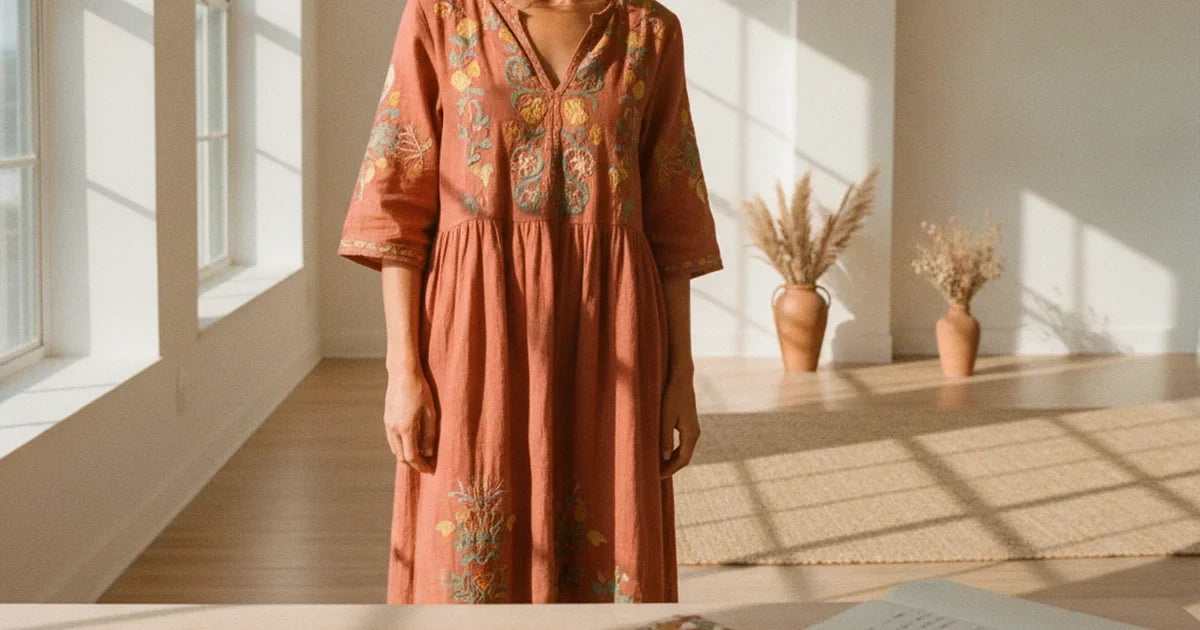
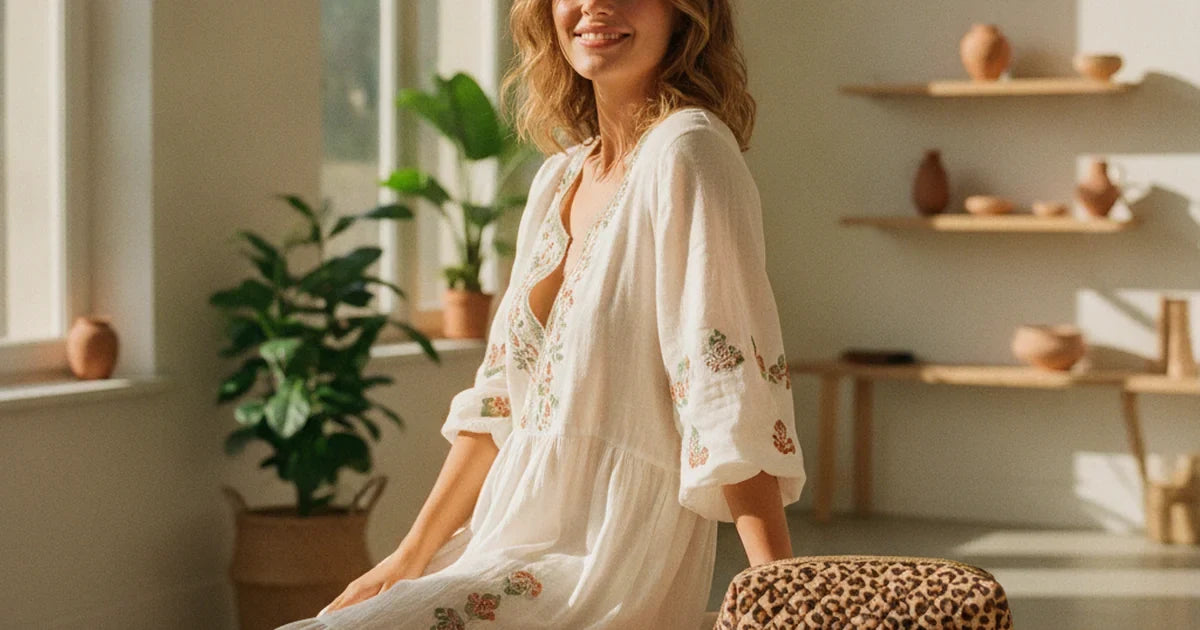
Do you want a unique, everyday wearable piece that tells something about you (or your team) without sacrificing comfort or quality? A custom embroidered women's jacket is the best option: elegant, durable, repairable, and legible over time. Whether it's an initial over the heart, a design on the back, a trim on the collar, or a discreet logo on the sleeve, this guide will take you step-by-step through: cut, material, placement, file, thread colors, lead times, and pricing. Along the way, we'll discuss ease of wear and care to ensure your jacket stays beautiful for a long time.
Custom women's jacket: how it works (idea → embroidery)
The 5 key decisions
- Cut: straight (more chic and clean) or oversized (layering, cool vibe).
- Material: denim (all-purpose), velvet/tweed (dressy), fleece/wool (winter), cotton canvas (casual).
- Placement: back, chest, sleeve, collar/lapels, pockets. A strong placement + a subtle reminder is enough.
- File: simple and legible visual, sufficient line thickness for embroidery, suitable typography.
- Colors: contrast, refined tone-on-tone, Pantone equivalences → thread color chart.
From visual to embroidery stitch
Embroidery "translates" your design into stitches (satin, chain stitch, fills). Lines that are too thin are thickened, and subtle gradients are simplified. On denim: clean outlines, high legibility. On velvet: chic relief, threads that catch the light. On fleece: prioritize legible solid areas (the pile absorbs details).
BAT and validation
- BAT (good to go): scale mock-up, placements, dimensions (e.g., 26 cm back, 8 cm chest), thread codes.
- Final check: spelling, proportions on the chosen size, margins to the edges (at least 2–3 cm).
- Material test: if the jacket is textured (tweed/velvet), request a photo of a stitch test.
Choosing the cut and material (straight, oversized; denim, velvet, fleece, tweed)
Straight vs. oversized cut
- Straight cut: structure, line legibility, suitable for office wear. Ideal for chest and collar.
- Oversized: relaxed attitude, space for hoodies/knits. Perfect for a statement back or sleeves.
Materials and embroidery rendering
| Material | Embroidery Rendering | Advantages | Points of Attention | Recommended Uses |
|---|---|---|---|---|
| Denim / cotton canvas | Sharpness, precise outlines | Durable, easy to wear | Avoid micro-details < 1 mm | Everyday, team, event |
| Velvet | Chic relief, light-catching | Immediate premium effect | Prefer medium contrasting threads | Evening, occasion, gift |
| Tweed / wool | Textured chic | Winter, formal | Irregular background → simplify | Dressy office, dinner |
| Fleece / sherpa | Legible solid areas | Comfort, warmth | Pile absorbs fine details | Outdoor, weekend |
Comfort & seasons
For summer/mid-season, a straight cotton/denim jacket (or lightly oversized) with chest/collar embroidery works everywhere. For autumn/winter, a velvet, tweed, or fleece base readily accommodates a larger back design (legible on open coats). Always consider ease of wear with layers.
Embroidery placements and sizes (back, chest, sleeve, collar, pockets)
Placement dictates the story the piece tells. A few simple rules help maintain elegant legibility and practicality.
| Area | Impact | Recommended Size | Style Advice | Practical Precaution |
|---|---|---|---|---|
| Back | Very strong | 20–28 cm | Centered medallion or full back | Beware of rubbing against bags/backs of chairs |
| Chest (heart) | Discreet | 6–9 cm | Monogram, script, fine symbol | Avoid too close to the lapel edge |
| Sleeve | Medium | 15–20 cm (vertical) | Lines, floral stems, year | Leave 2–3 cm from cuffs |
| Collar / lapels | Premium | Fine trim | Regular stitches, bright thread | Protect when ironing |
| Pockets | Reminder | 4–6 cm | Mini design / initial | Avoid snagging areas |
- Rule 1: 1 strong placement + 1 subtle reminder = clear message.
- Rule 2: keep at least 20 mm margin from edges and seams.
- Rule 3: on textured materials (tweed/fleece), prioritize solid shapes.
Files, typographies, and thread colors
Accepted formats & best practices
| Type | Format | Advantage | Good to know |
|---|---|---|---|
| Vector | .AI / .SVG / .PDF | Perfect scaling | Ideal for logos/fonts |
| Image | .PNG 300 dpi | Transparency | Avoid overly fine gradients |
- Minimum thickness: aim for ≥ 0.8–1 mm in embroidery (varies by thread/fabric).
- Typographies: without fine serifs or reinforced; legible scripts.
- Thread colors: request a Pantone equivalent when possible, check contrast on the actual material.
- Gradients: better as solid areas and hatching than true thread-by-thread gradients.
Sizes, ease guide, and fitting
Measurements
- Bust: at the fullest point, horizontally.
- Shoulder width: shoulder to shoulder, back.
- Back length: base of neck → bottom of jacket.
- Sleeve: shoulder → wrist, elbow slightly bent.
Ease according to season
- T-shirt/blouse: +6 to +8 cm bust.
- Medium knit: +8 to +10 cm.
- Hoodie/chunky knit: +10 to +12 cm.
Try on the base garment (without embroidery) when possible. Embroidery does not "shrink" the jacket but slightly stiffens the area: avoid overly snug sizes if embroidering the back/sleeves.
Lead times, quantities (MOQ), and pricing: what to expect
Single unit vs. small series
A single unit includes development (file, tests, BAT): more time initially, total flexibility. For a small series, the unit cost is often faster after validation of the first sample.
Price factors
- Surface area & density: full back > medallion > chest.
- Number of colors: thread changes = time.
- Multiple placements: add to preparation/application.
- Material: tweed/velvet require more care.
- Options: custom labels, embroidered patches, packaging.
Typical lead times (indicative)
- Development (files, BAT): a few days depending on back-and-forth.
- Production: variable depending on quantity and complexity.
- Shipping: depending on destination and carrier.
Care & durability (embroidery and material)
Washing & drying
- Turn the jacket inside out, close buttons/zips, place in a laundry bag.
- Delicate cycle cold/30 °C, mild detergent, low spin.
- Dry flat or on a wide hanger, away from direct sunlight. No tumble drying.
Ironing & steaming
- Inside out with a pressing cloth (damp thin fabric), moderate heat.
- Right side out only if necessary, hovering with a protective cloth.
Repairs & after-sales service
A pulled thread? Pull it back to the inside with a needle and secure with a discreet stitch. A heavily used area (back) can receive a thin iron-on reinforcement on the inside. Embroidery is an ally of repairability: a small stain can also be hidden by adding a small motif.
Inspirations & uses (personal, gift, professional/event)
Personal customization
- Initials over the heart (6–8 cm): premium sobriety.
- Date on the sleeve: discreet and sentimental.
- Symbol on the collar/lapel: intimate signature.
Gifts
Birthday, bachelorette party, success, birth: a custom embroidered women's jacket marks the moment without being ephemeral. Choose a neutral base (denim/ecru) and embroidery that speaks (initial, small floral motif, keyword).
Pro/event
Boutique team, event staff, creative collective: chest logo + sleeve reminder, thread palette aligned with brand guidelines. Result: controlled visibility, consistent image, reusable piece.
Example combos (cut × material × placement)
- Straight × denim × chest + collar: 7 cm monogram + fine trim. Perfect for office/casual chic.
- Oversized × velvet × back + pocket: 24 cm medallion + 4 cm leaf. Couture effect, evening.
- Straight × tweed × collar/lapels: regular tone-on-tone stitches. Very dressy.
- Oversized × fleece × sleeve: 18 cm vertical line, legible and comfortable.
FAQ — Custom embroidered women's jacket
What file format is best for embroidery?
A vector file (.AI/.SVG/.PDF) guarantees clean outlines at any size. A .PNG 300 dpi also works if there are no complex gradients. Avoid overly thin lines: reinforce them to maintain legibility once embroidered.
Where should embroidery be placed for a chic and office-appropriate look?
The chest over the heart (6–9 cm) with a legible monogram/script is ideal. You can add a fine trim to the collar or a pocket reminder 4–6 cm. Avoid accumulating back + sleeves + collar on the same piece.
Does embroidery change how the jacket needs to be cared for?
A little: prioritize the delicate cycle, iron inside out with a pressing cloth, and dry flat. For velvet/tweed, prefer steaming and airing between wears.
What's the difference between a single unit and a small series?
A single unit includes the complete development of your piece (files, BAT, material test). A small series builds on this work: once validated, the production of subsequent units is more straightforward.
Can a very fine logo or one with gradients be embroidered?
We simplify: lines that are too thin are thickened (≈ ≥ 0.8–1 mm) and gradients are replaced by solid areas or hatching. The BAT allows for checking aesthetics before production.
Which placement lasts the longest?
The chest and collar are the most protected. The back is spectacular but rubs against chair backs and bags: prioritize flat stitches and gentle care.
How do I choose the jacket size if I want to embroider the back?
Avoid an overly snug size: embroidery slightly stiffens the area. Maintain ease suitable for your layers (t-shirt, knit, hoodie): +6 to +12 cm depending on the season.
Conclusion
A custom embroidered women's jacket is a piece that speaks volumes: a cut consistent with your life, material adapted to the season, embroidery placed with precision, a clean file, and a mastered palette. By choosing embroidery, you opt for an elegant, durable, repairable, and timeless marking. Start with the use (office, weekend, event), decide on straight or oversized, choose a main placement + a reminder, and validate a precise BAT. You'll get a jacket that lasts for years — and effortlessly defines your style.
Ready to create yours? Bokabas supports you from idea to BAT: denim, velvet, tweed, or fleece bases, controlled placements (chest, back, sleeve, collar), threads chosen from a color chart, clean finishes, and care advice. Tell us the cut, material, and visual: we'll embroider your story.

Written by Lucas Guillaud
%20without%20sacrificing%20comfort%20or%20quality?%20A%20custom%20embroidered%20women's%20jacket%20is%20the%20best%20option:%20elegant,%20...)
Leave a comment
This site is protected by hCaptcha and the hCaptcha Privacy Policy and Terms of Service apply.